What Are Dental Implants and How Do They Work?
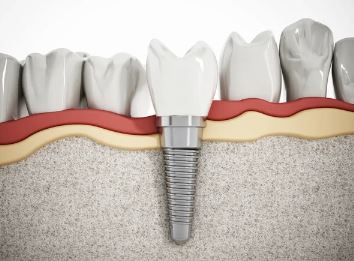
A dental implant is a permanent replacement for a missing tooth structure. While traditional bridges sit above the gumline and partial dentures rely on clips, an implant replaces both the visible crown and the underlying root.
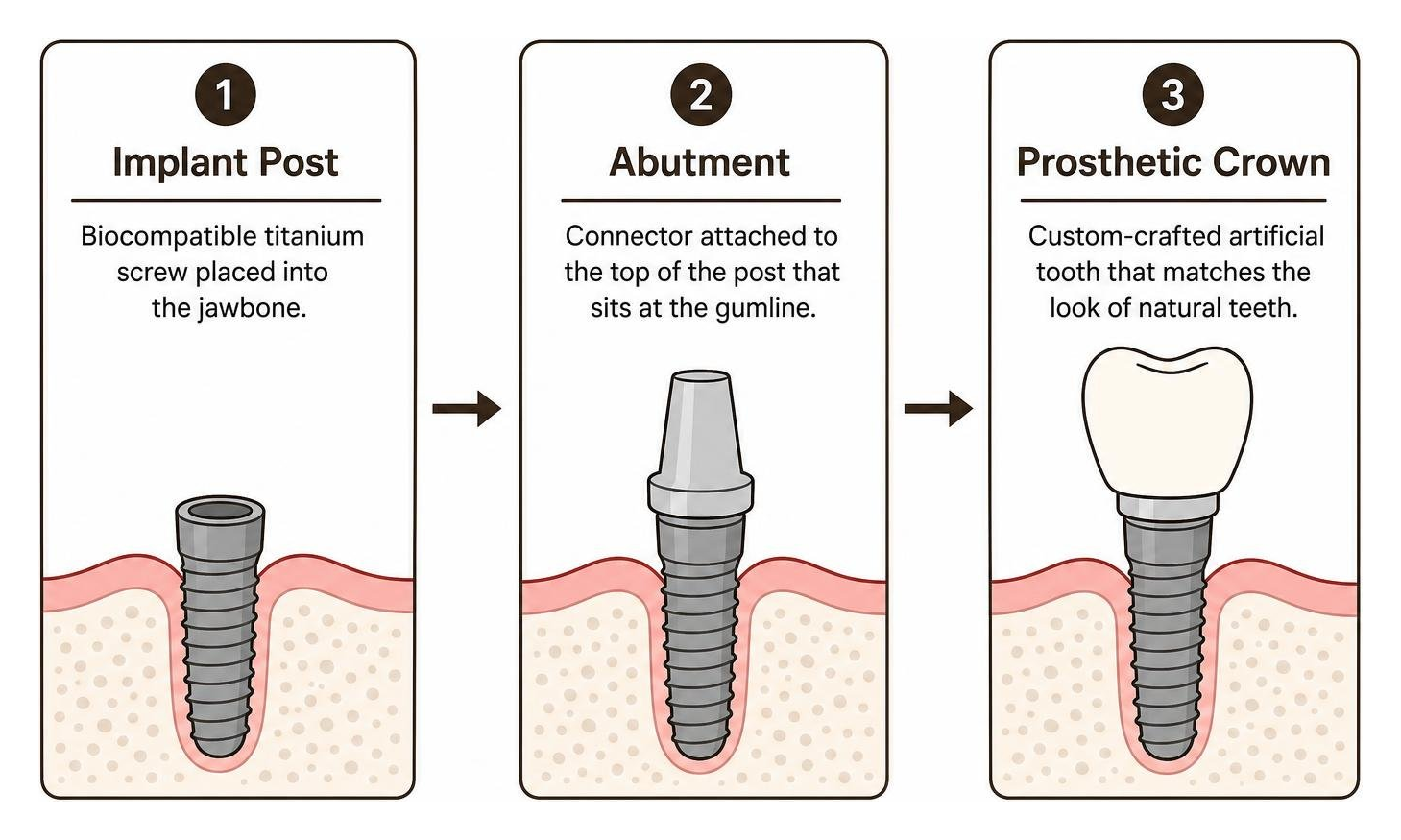
A complete implant restoration consists of three core components:
- The Implant Post: A small, biocompatible screw made from medical-grade titanium that is surgically placed into the jawbone.
- The Abutment: A sturdy connector piece attached to the top of the post that sits right at the gumline.
- The Prosthetic Crown: A custom-crafted artificial tooth made from porcelain or ceramic that matches the color, shape, and translucency of natural teeth.
The foundation of modern implant dentistry relies on a biological process called osseointegration. When placed into healthy bone, titanium naturally fuses directly with the living bone tissue over several months. Research documented in statpearls clinical reviews (NBK470448) confirms that this fusion provides exceptional biomechanical stability, effectively mimicking a natural tooth root.
Because the post integrates into your jaw, it transmits chewing forces down into the bone. Natural roots stimulate bone renewal; when a tooth is lost, that stimulation ceases, causing the surrounding bone to slowly resorb (shrink). Dental implants provide continuous stimulation, preventing bone loss and preserving facial contours. According to the Mayo Clinic’s guide to dental implant surgery, this unique bone preservation makes implants the premier long-term solution for restorative tooth replacement.
Who Makes an Ideal Candidate for Dental Implants?
Most adults in good general health who are missing one or more teeth are eligible candidates for modern implant care. Ideal candidates typically share key characteristics:
- Sufficient Jawbone Density: Adequate bone volume and height are needed to anchor the titanium post firmly.
- Healthy Gum Tissue: Candidates must be free of active periodontal (gum) disease.
- Good General Health: Uncontrolled systemic conditions—such as uncontrolled diabetes or active autoimmune disorders—can interfere with bone healing.
- Non-Smokers: Tobacco use constricts blood vessels and significantly elevates the risk of implant failure.
Certain medical factors require careful pre-surgical evaluation. For example, patients undergoing treatment for osteoporosis with oral or intravenous bisphosphonates require specific treatment planning, as these medications alter bone remodeling rates.
During your consultation at Gentle Family Dental Care, we review your complete health history, take 3D scans, and create a personalized dental implant treatment plan tailored to your anatomy.
Preparatory Procedures and Bone Grafting
When a tooth is lost, the alveolar bone begins to deteriorate relatively quickly. If several months or years have passed since tooth loss, you may not have enough bone height or width to support an implant.
Fortunately, modern bone grafting techniques make implant placement possible even after bone resorption has occurred:
- Socket Preservation: Placed immediately into an extraction site to protect the surrounding bone walls while the area heals.
- Ridge Augmentation: Rebuilds the natural height and width of the jawbone when significant shrinkage has occurred over time.
- Sinus Lift (Sinus Augmentation): When placing implants in the upper back jaw (maxilla), bone is often naturally thin, and the maxillary sinus sits close to the ridge. A sinus lift gently elevates the sinus membrane and places bone grafting material beneath it to create adequate vertical depth.
Bone graft materials may include your own natural bone, donor tissue, or biocompatible synthetic minerals. Healing timelines vary; minor grafts can often be performed at the same time as implant placement, while extensive grafting may require three to six months of healing before placing the post. You can explore detailed options in our guide to bone graft options for dental restorations.
The Step-by-Step Surgical and Restoration Process
Receiving dental implants involves precise, multi-stage clinical care designed to protect oral tissues and guarantee lasting results.
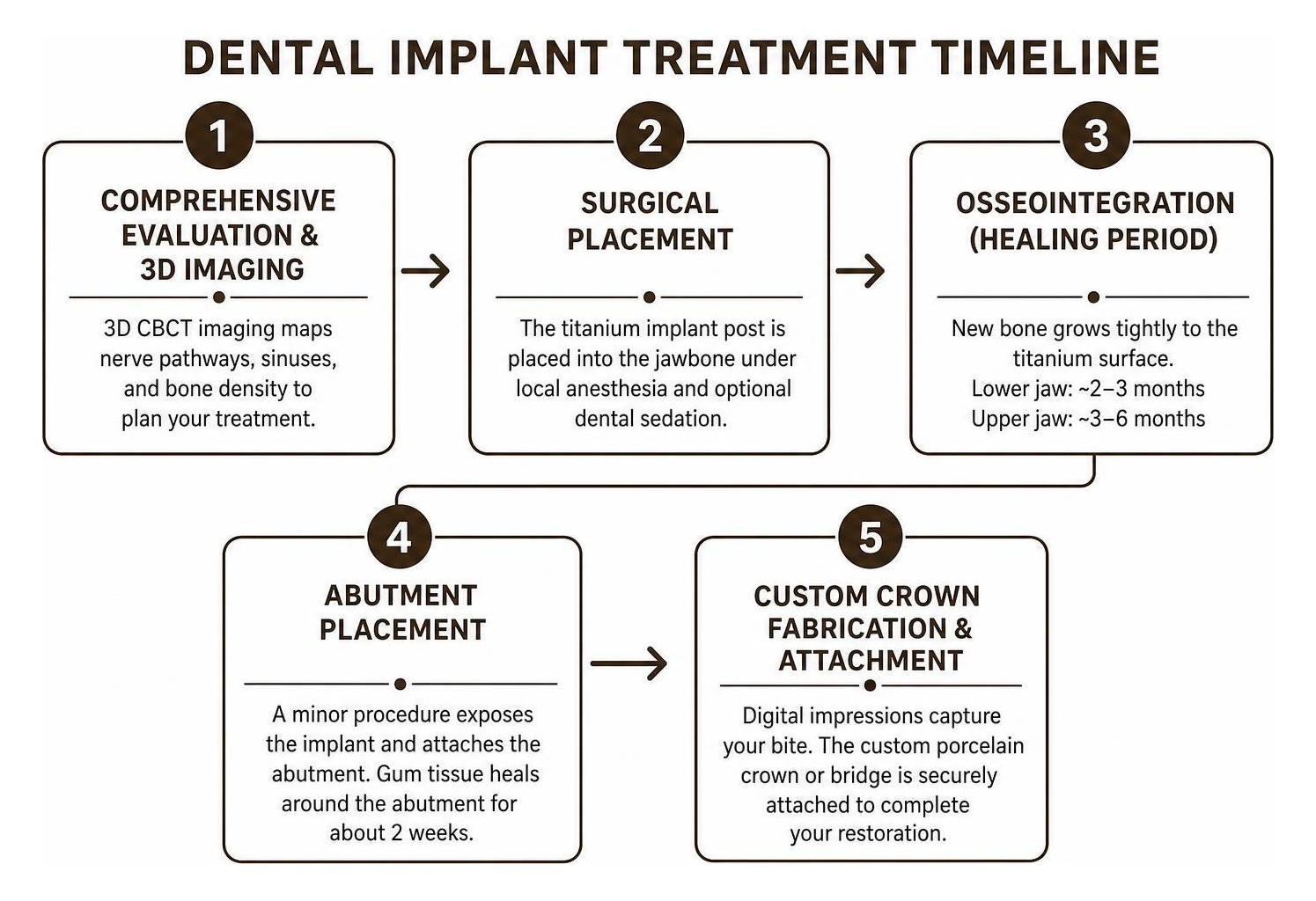
- Comprehensive Evaluation & 3D Imaging: We use advanced Cone Beam Computed Tomography (CBCT) imaging to map your nerve pathways, sinus cavities, and bone density with sub-millimeter precision.
- Surgical Placement: Under local anesthesia and optional dental sedation, the titanium implant post is positioned into the jawbone. Controlled surgical protocols keep the bone cool and undisturbed to encourage optimal healing.
- Osseointegration (Healing Period): Over the next two to six months, new bone cells grow tightly against the textured titanium surface. The lower jaw (mandible) typically heals within two to three months, while the softer upper jaw (maxilla) requires three to six months.
- Abutment Placement: Once osseointegration is confirmed, a minor procedure exposes the top of the post and attaches the abutment connector. Gum tissue is allowed to heal around the abutment for approximately two weeks.
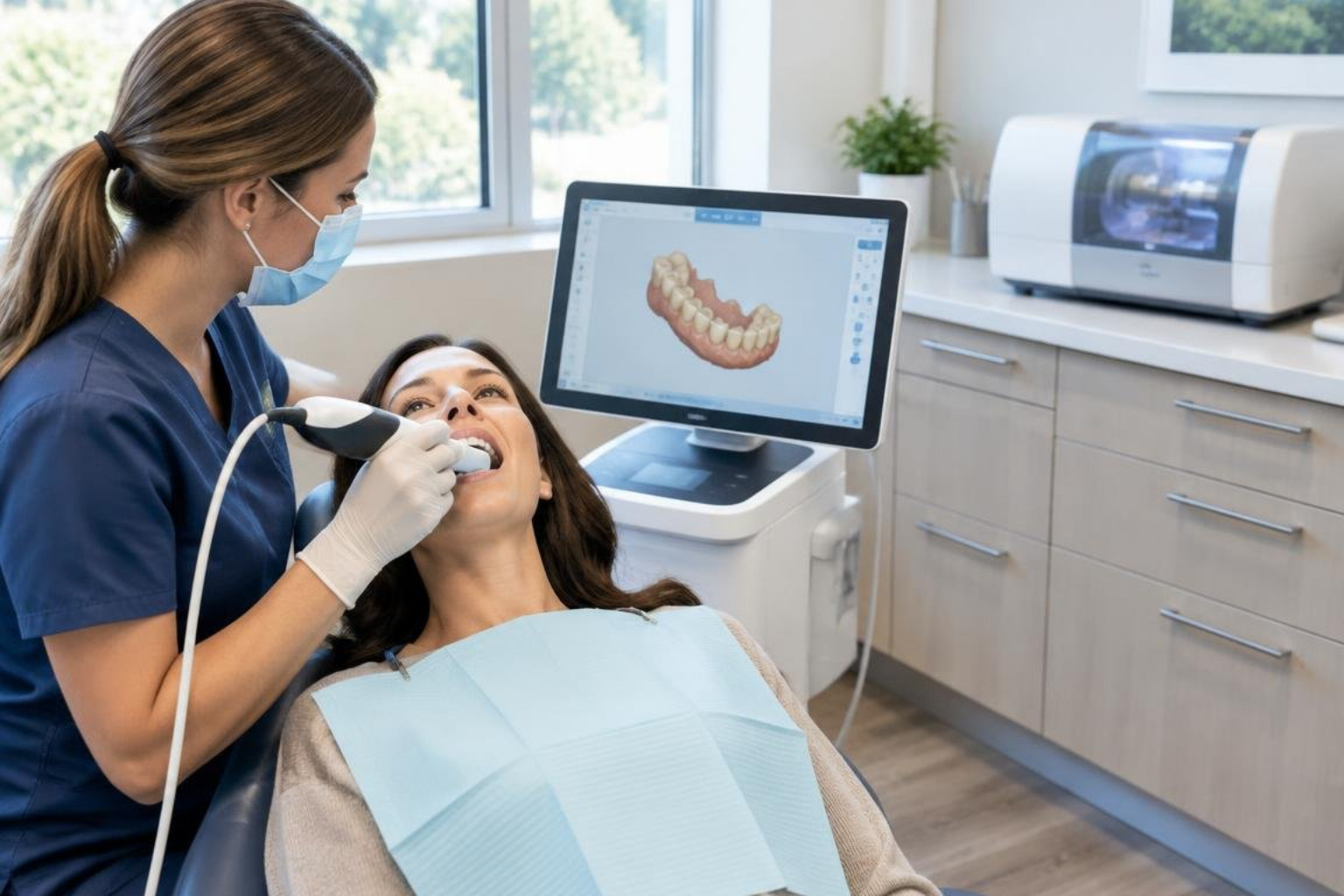
- Custom Crown Fabrication & Attachment: Digital impressions capture the exact alignment of your bite. Your final porcelain restoration—such as a CEREC single-visit crown or laboratory-crafted bridge—is securely attached.
For a detailed walkthrough of what your initial visits look like, read our guide on what to expect with dental implants in Logan UT.
Recovery Timeline and Long-Term Maintenance
Post-operative recovery is surprisingly manageable for most patients. Mild swelling, minor bruising, and slight gum tenderness are normal for the first 48 to 72 hours and respond well to over-the-counter pain medications and cold compresses.
To maintain your restoration and surrounding gum tissues over time:
- Adopt a Soft Diet Initially: Stick to nutritious soft foods like smoothies, yogurt, scrambled eggs, and soups for the first several days after surgery.
- Maintain Impeccable Oral Hygiene: While titanium and porcelain cannot get cavities, the surrounding gum tissue and bone remain susceptible to inflammation. As outlined in evidence-based tooth replacement guidance from Harvard Health, neglecting plaque control can lead to peri-implantitis—a condition similar to gum disease that threatens bone support.
- Use Specialized Cleaning Aids: Clean around implant crowns with soft-bristled brushes, interdental brushes, and water flossers to keep the gumline clean.
- Attend Routine Checkups: Regular dental exams allow our team to check bone stability and monitor tissue health.
Dental Implant Restoration Options
Dental implants offer adaptable solutions whether you are missing one tooth, several teeth in a row, or an entire arch.
| Restoration Type | Best Suited For | Number of Implants Used | Stability & Function |
|---|---|---|---|
| Single-Tooth Implant | Isolated missing tooth | 1 implant post | Completely independent; spares adjacent teeth |
| Implant-Supported Bridge | 3 to 4 missing teeth in a row | 2 to 3 implant posts | Fixed in place; eliminates need for natural tooth reduction |
| Full-Arch Fixed Prosthesis | Complete upper or lower arch loss | 4 to 6 implant posts | Permanent, non-removable; restores full bite force |
| Implant-Retained Overdenture | Edentulous patients seeking stability | 2 to 4 implant posts | Snaps onto implants; removable for daily cleaning |
Through our comprehensive general dentistry and restorative care, we configure restorations to match your oral anatomy and daily lifestyle.
Comparing Fixed vs. Removable Implant-Supported Prosthetics
When replacing a complete arch of missing teeth, patients can choose between fixed (permanent) and removable implant solutions:
- Fixed Full-Arch Prosthetics (Permanent Hybrid Bridges): Screwed directly onto four to six implants. They can only be removed by a dentist during routine maintenance. They feel and function remarkably like natural teeth, providing maximum bite force and eliminating shifting.
- Removable Overdentures (Snap-On Dentures): Snap securely onto specialized locator attachments mounted on two to four implants. They provide vastly superior stability compared to traditional dentures, prevent embarrassing slips during meals, and can be snapped out at bedtime for simple cleaning.
Combining functional stability with advanced cosmetic dentistry options ensures that whichever restorative path you choose, your smile looks natural and symmetrical.
Understanding Treatment Costs and Insurance Coverage

Every dental implant treatment plan is customized to the patient’s individual anatomy, meaning overall costs vary depending on the complexity of the case. During your initial consultation, we provide a complete breakdown of treatment steps so you know exactly what to expect before moving forward.
Factors Influencing the Cost of Dental Implants
Several key elements determine the final cost of implant therapy:
- Number and Location of Implants: Replacing a single molar requires fewer clinical steps and materials than rebuilding a full dental arch.
- Pre-Surgical Treatments: Bone grafting, sinus elevations, or tooth extractions impact total treatment scope.
- Restoration Type and Materials: Custom zirconia or high-grade porcelain crowns require specialized dental laboratory fabrication.
- Sedation Preferences: Options range from standard local anesthesia to deeper forms of conscious dental sedation.
Many dental insurance plans provide partial benefits for implant procedures, often contributing toward the preparatory extractions, bone grafting, or the final restorative crown. Our front-office team works directly with your insurance provider to maximize eligible benefits, and we offer flexible financing options and third-party payment plans to make restorative care manageable.
To learn more about what to expect during your first evaluation, review our consultation walkthrough for dental implant visits.
Frequently Asked Questions About Tooth Replacement
How painful is the implant procedure?
Implant placement is typically much more comfortable than patients anticipate. Because bone tissue lacks pain-sensing nerves, discomfort during the procedure is prevented with local anesthesia. Most patients report that having an implant placed involves less post-operative soreness than a standard tooth extraction. If you feel nervous about treatment, gentle sedation options can help you stay completely relaxed. For more details on patient comfort, explore our answers to frequently asked dental questions.
How long do artificial roots and crowns last?
With proper daily flossing, brushing, and regular cleanings, titanium implant posts are designed to last a lifetime. Clinical studies report long-term success rates exceeding 97% over ten years. The custom porcelain crown attached to the post experiences normal daily wear and typically lasts 10 to 15 years or longer before needing routine replacement or maintenance.
What happens if an implant fails to integrate?
Implant failure is rare, occurring in fewer than 3% of cases. When failure happens, it usually stems from tobacco use, early mechanical pressure, or an underlying medical issue that prevents bone bonding. In these situations, the loose post is gently removed, the area is thoroughly cleaned, and a small bone graft is placed. After healing for approximately three months, a replacement implant can usually be placed successfully.
Conclusion
Missing teeth can affect your nutrition, comfort, and confidence, but you do not have to live with gaps or loose dentures. Dental implants provide a dependable, natural-feeling foundation that protects your jawbone and restores your smile for life.
At Gentle Family Dental Care, we take pride in serving individuals and families throughout Cache Valley—including our neighbors in Logan, North Logan, Smithfield, and Hyrum. With more than two decades of gentle, patient-focused experience, bilingual Spanish-speaking care, and advanced dental technology, our team is here to guide you toward a healthy, complete smile.
Schedule your consultation with Gentle Family Dental Care today to discover how implant dentistry can renew your oral health.