How CEREC Digital Dentistry Makes Same-Day Restorations Possible
CEREC digital dentistry uses a 3D scan, computer-aided design, and chairside milling to make custom restorations such as crowns. In many cases, a dentist can prepare, make, and place the restoration in one visit. Some materials need an added firing step, so appointment time depends on the treatment.
For families in Logan and across Cache Valley, including North Logan, Smithfield, and Hyrum, that can mean fewer trips and no traditional putty impression. This guide from Gentle Family Dental Care explains how the technology works and what patients can expect.
Core Components of the CEREC Digital Dentistry Workflow
Modern restorative dentistry has evolved past messy impression trays, temporary crowns that pop off at dinner, and multi-week waits for an outside laboratory. With over 35 years of continuous clinical innovation, the CEREC ecosystem unites every phase of tooth restoration into a unified chairside system.
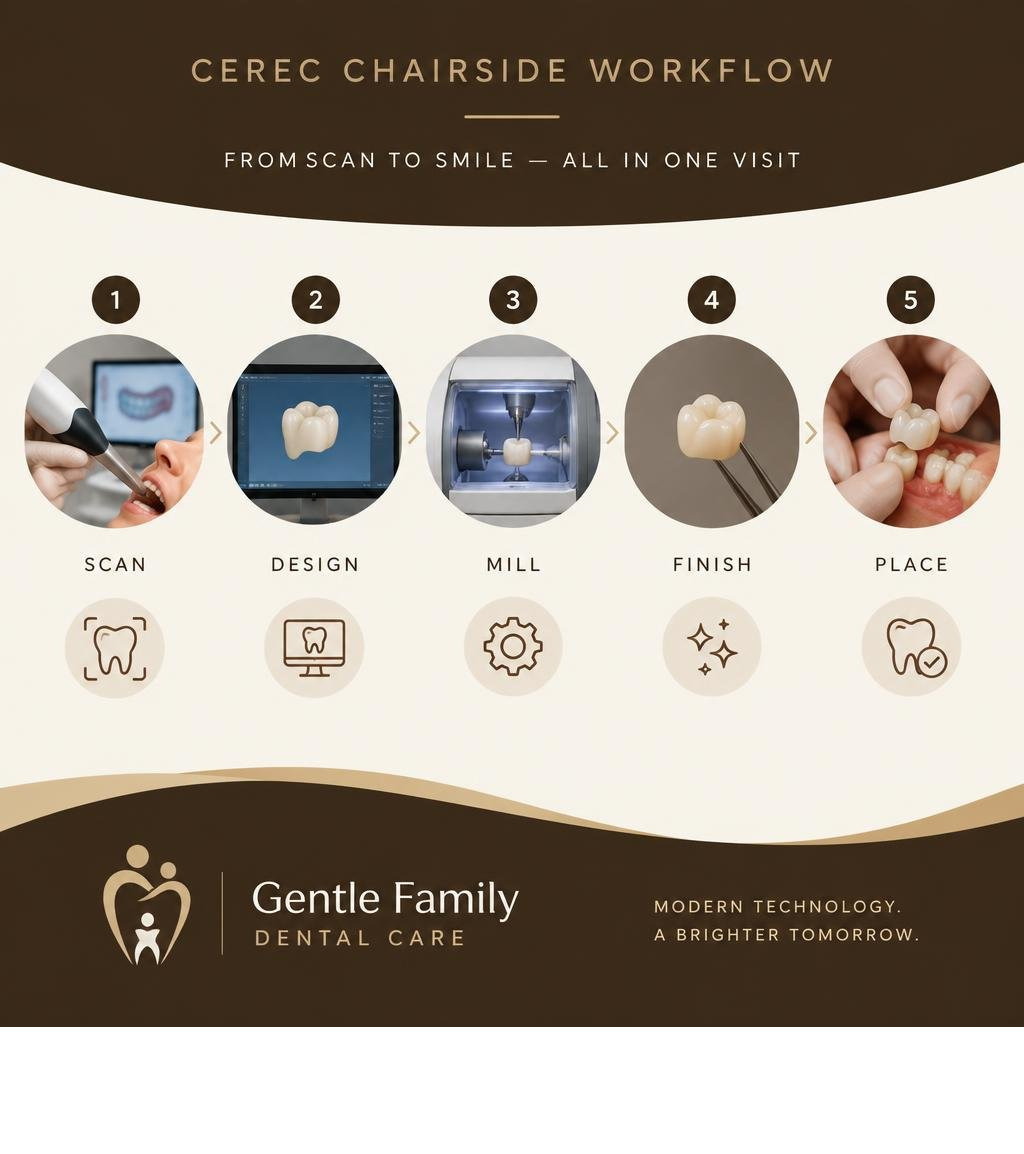
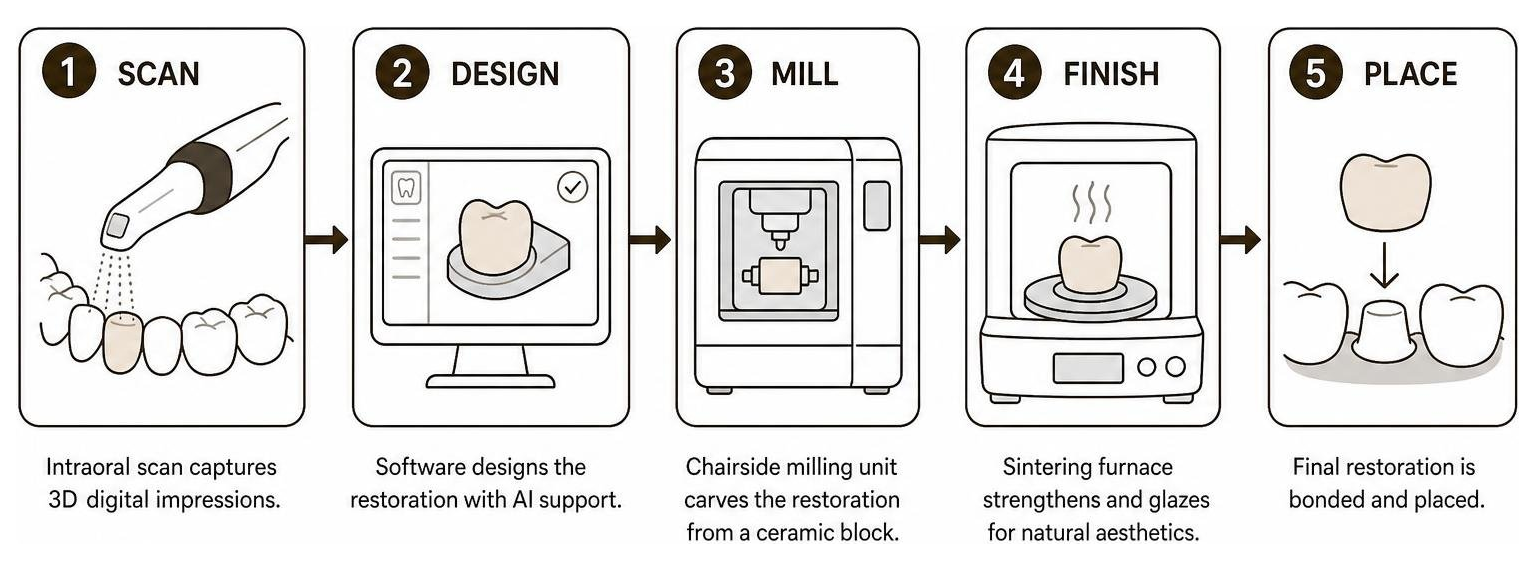
When patients visit us for routine general dentistry treatments, maintaining natural tooth structure is always our top priority. The complete chairside workflow relies on four interconnected pillars working in harmony:
- Intraoral Data Acquisition: High-speed optical scanning captures detailed 3D digital impressions of the prepared tooth and surrounding dentition.
- CAD Restoration Design: Intelligent software analyzes the patient’s bite anatomy and calculates an exact restoration proposal.
- CAM Chairside Milling: A high-precision milling unit carves the restoration from a solid ceramic or zirconia block within minutes.
- Induction Sintering and Finishing: A compact furnace sinters and glazes the restoration to achieve full mechanical strength and natural aesthetics.
Clinicians can review this overview of the CEREC chairside system to see how tightly these units integrate.
Intraoral Scanning and Data Capture
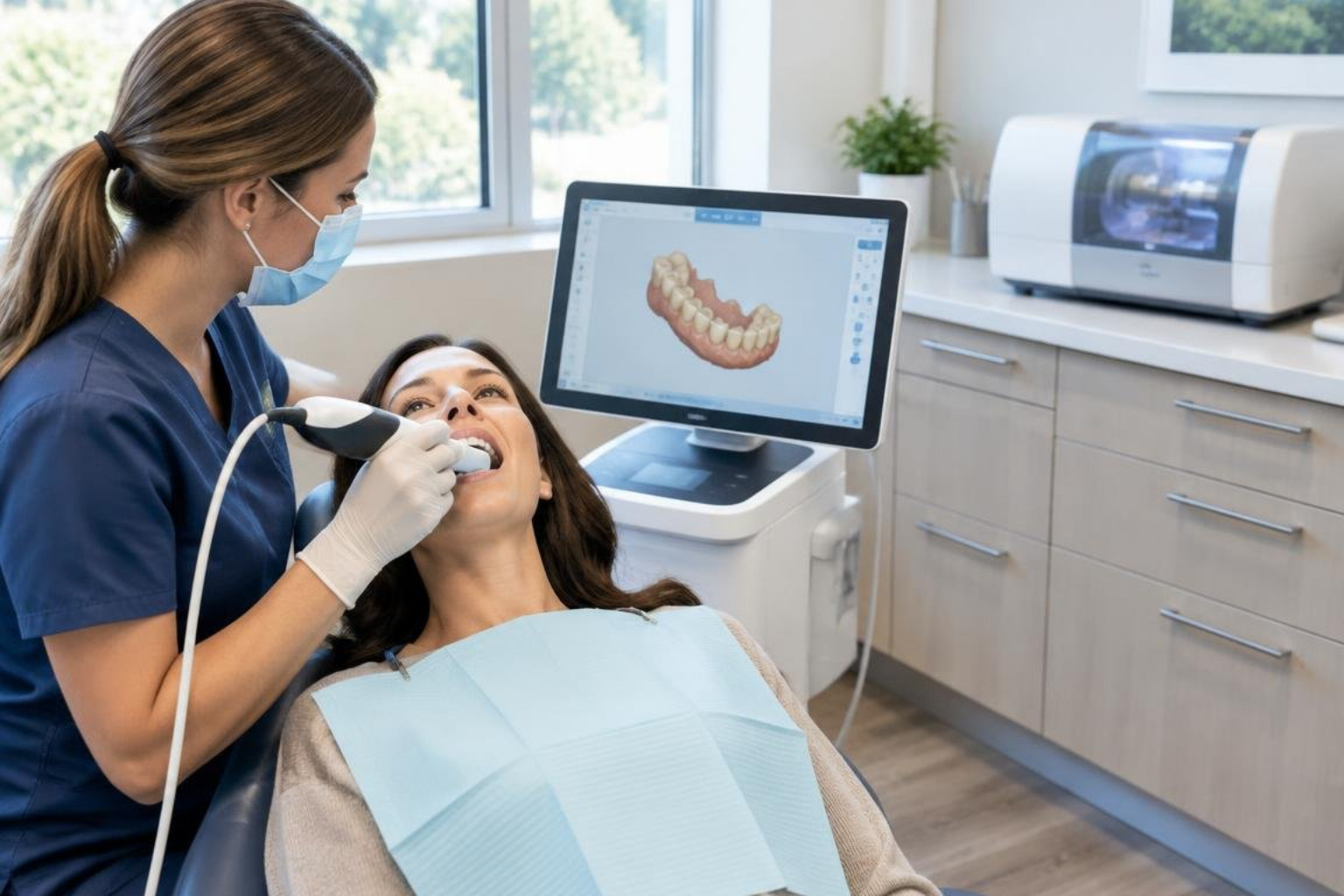
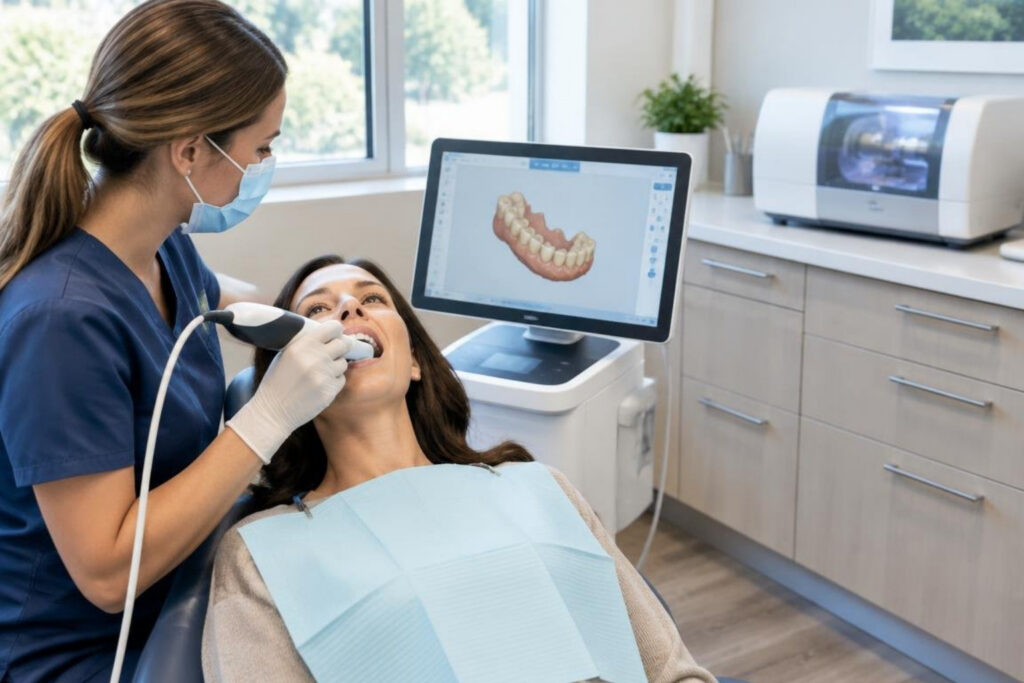
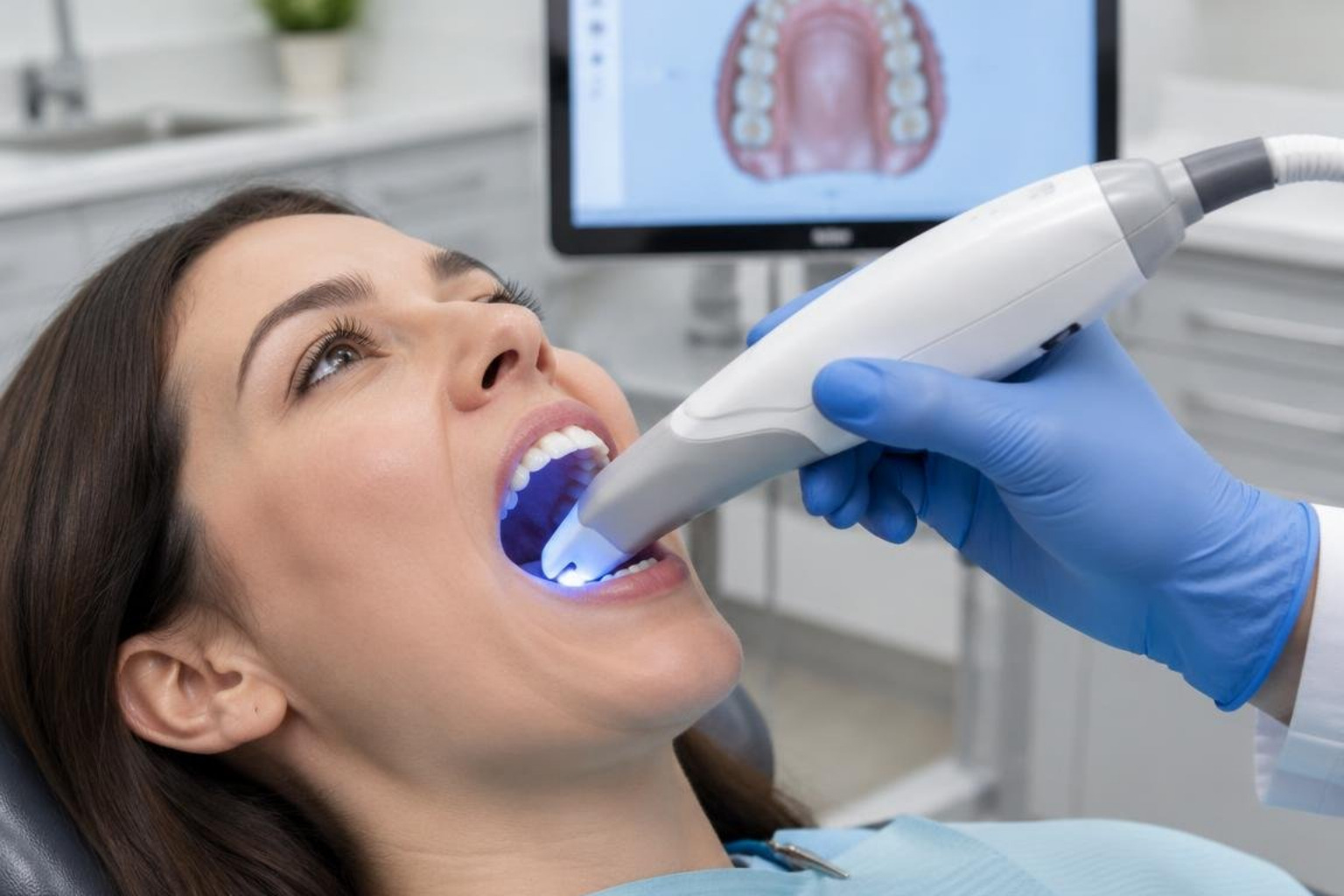
The entire restorative process starts with pristine digital data. Instead of placing trays of cold alginate or polyvinyl siloxane in your mouth, we glide an ergonomic intraoral scanner tip smoothly across your dental arches.
The optical sensor uses Dynamic Depth Scan technology to read deep into prep margins and interproximal areas. By processing over 100 million contrast values per second, the scanner generates upwards of 1 million 3D data points every second. This high-density data stream builds a true-to-life 3D virtual model in photorealistic color, eliminating distortion caused by tissue movement or impression tray flexing.
AI-Driven Design in CEREC Digital Dentistry Software
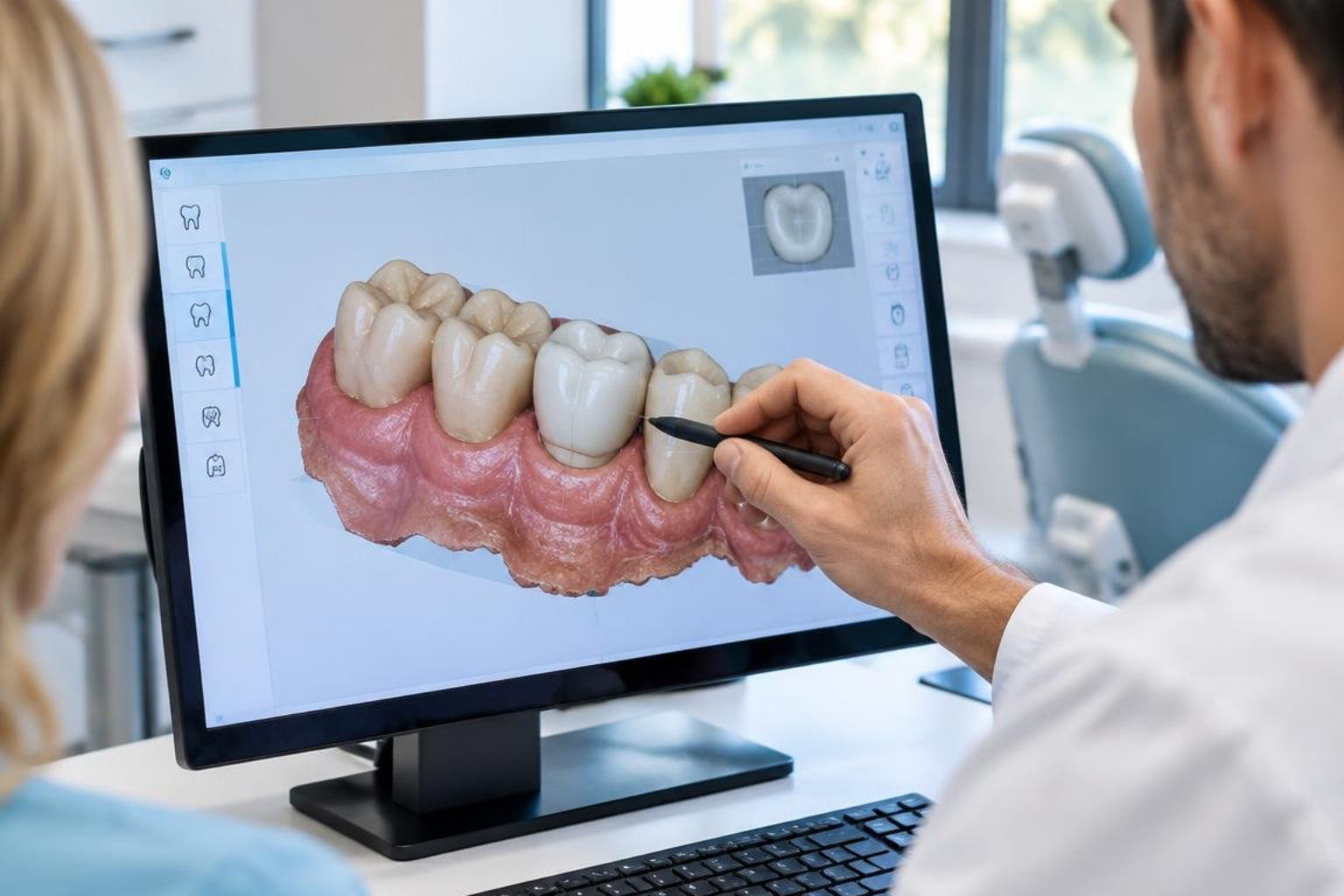
Once scanning finishes, CEREC Software Generation 5 takes over. Utilizing the proprietary BioJaw algorithm, the software draws from an extensive biogeneric database to propose a tooth shape that mirrors the patient’s natural morphology, wear facets, and surrounding anatomy.
The intelligent 5-click concept automates margin detection, baseline restoration modeling, and occlusion calculation. A built-in virtual articulator calculates dynamic chewing movements, minimizing the need for manual bite adjustments after placement. For patients seeking smile enhancements through cosmetic dentistry procedures, this AI-driven approach delivers natural anatomical contours that blend effortlessly with adjacent teeth.
CEREC Primescan vs. Omnicam: Precision and Speed in Digital Scanning
Digital scanning technology has made massive leaps forward over the last decade. While earlier scanners like the CEREC Omnicam transformed digital impressions, the current generation CEREC Primescan sets a new benchmark for speed, field of view, and optical accuracy.
| Feature / Metric | CEREC Omnicam | CEREC Primescan |
|---|---|---|
| Full-Arch Scan Time | 8–12 minutes | 2–3 minutes |
| Data Processing Rate | Standard optical video feed | >100M contrast values / >1M 3D points per sec |
| Scanner Tip Size (Field of View) | Compact tip (~16 x 14 mm) | Large field of view (22.5 x 20.7 mm) |
| Scanner Weight | 316 g | 457 g (plastic sleeve) / 524.5 g (metal sleeve) |
| Depth of Field | Up to 15 mm | Up to 20 mm with Dynamic Depth Scan |
| Battery Autonomy (AC Cart) | Tethered power dependency | >60 minutes continuous cordless scanning |
Deep Marginal Accuracy and Dynamic Depth Scanning
Capturing sharp margins on steep preparation angles, subgingival margins, or highly reflective restorative materials used to pose challenges for digital optics.
Primescan solves this with its Smart Pixel sensor and high-frequency projected light patterns. The scanner captures crisp data at depths up to 20 mm, allowing clinicians to clearly see the transition between tooth structure and soft tissue without painful tissue retraction. Because the data stream processes fluidly as the wand moves, capturing complete upper and lower arches takes just two to three minutes.
Milling and Sintering: High-Strength Materials in a Single Visit
Once the design is finalized, the digital blueprint transmits instantly to the CEREC Primemill. This chairside milling unit utilizes a 4-motor setup and advanced electronics to grind and mill restorations with micron-level precision.
Using Super Fast mode, the Primemill can mill a full-contour zirconia crown in approximately 5 minutes. An extra-fine 0.5 mm diamond bur carves detailed occlusal fissures, marginal ridges, and interproximal contact zones. Unlike older milling units like the CEREC MC X (limited to 55 mm blocks), the Primemill processes block sizes up to 70 mm, accommodating everything from delicate single inlays to multi-unit bridges and custom abutments for same-day crowns.
Induction Sintering with CEREC SpeedFire
Milling zirconia in its softer, pre-sintered state makes fabrication fast, but the material must undergo thermal processing to reach its final strength. The CEREC SpeedFire induction furnace handles this step right in the operatory.
Reaching maximum temperatures up to 1600 °C with heat-up speeds of 300 °C per minute, the SpeedFire sinters full-contour zirconia restorations (such as CEREC Zirconia+) in under 15 minutes (typically 14:48 minutes for standard wall thicknesses). For advanced glass-ceramics like CEREC Tessera, its pre-heating function completes a glaze and matrix crystallization cycle in just 4:30 minutes.
Restorative Materials Processed with CEREC Digital Dentistry
Chairside CAD/CAM supports a versatile spectrum of high-performance materials tailored to different clinical needs:
- Advanced Lithium Disilicate (CEREC Tessera): Achieves >700 MPa biaxial flexural strength with a conservative 1.0 mm tooth preparation design, offering high translucency for anterior and premolar restorations.
- High-Strength Translucent Zirconia (CEREC Zirconia+): Exceeds 1,000 MPa flexural strength, allowing thin wall preparations down to 0.5 mm for maximum conservation of healthy tooth structure.
- Multi-Layered Zirconia (CEREC MTL Zirconia): Provides >850 MPa strength with a built-in natural color gradient, transitioning seamlessly from a durable dentin core to translucent incisal edges.
These materials give us the flexibility to fabricate inlays, onlays, aesthetic veneers, and durable restorations over dental implant restorations without relying on external laboratory turnaround times.
Expanding Clinical Capabilities with 3D Printing and Cloud Integration
Chairside dentistry now reaches beyond milled ceramic blocks. Combining CEREC data with modern additive manufacturing and cloud networks unlocks a complete digital treatment ecosystem.
With medical-grade 3D printing systems like Primeprint Solution, intraoral scan data translates directly into biocompatible dental appliances. Automated washing and light-curing units produce dimensionally stable surgical guides (such as CEREC Guide 3), digital nightguards, and sleep apnea appliances with minimal hands-on labor.
For patients navigating their dental implant appointment process, merging 3D cone-beam computed tomography (CBCT) scans with Primescan surface files allows us to plan implant placement digitally and 3D-print a custom surgical guide right in the office.
Furthermore, cloud collaboration platforms like DS Core let our practice securely share full-arch STL data, design files, and case records with specialized laboratories and imaging partners. This cloud integration expands our suite of advanced dental services, ensuring seamless care whether a case is completed chairside or co-managed with master dental ceramists.
Frequently Asked Questions About CEREC Technology
How long does a single-visit CEREC crown appointment take?
A typical appointment generally lasts between 90 and 120 minutes from start to finish. Preparing the tooth and capturing the optical scan takes roughly 15 to 20 minutes. The automated AI design completes in a few minutes, followed by 5 to 10 minutes of milling in the Primemill. If your restoration uses zirconia or advanced glass-ceramic, thermal firing and glazing in the SpeedFire takes between 5 and 15 minutes. Once cooled, we bond or cement the crown directly into place, letting you walk out with a permanent tooth in a single appointment.
Are CEREC same-day crowns as durable as traditional laboratory crowns?
Yes. Restorations made with CEREC are carved from factory-manufactured ceramic and zirconia blocks that are free of the microscopic voids and casting defects sometimes found in hand-layered laboratory porcelain. With materials like CEREC Tessera offering flexural strength above 700 MPa and CEREC Zirconia+ exceeding 1,000 MPa, same-day restorations match or exceed the durability, marginal fit, and fracture resistance of traditional lab-fabricated crowns over long-term clinical tracking.
What dental restorations can be created using CEREC technology?
The CEREC system produces a broad range of custom restorations, including:
- Full-contour posterior and anterior crowns
- Conservative inlays and onlays that preserve natural enamel
- Aesthetic porcelain veneers
- Custom implant abutments and screw-retained implant crowns
- Multi-unit fixed bridges up to 70 mm in total span
- 3D-printed surgical drill guides and occlusal splints
Conclusion
CEREC digital dentistry delivers precise, strong, and lifelike tooth restorations in a single comfortable visit. By uniting sub-millimeter intraoral scanning, intelligent software design, high-speed milling, and rapid induction sintering, our team eliminates the goopy impression material, temporary crowns, and multiple appointments that traditional dental work used to require.
At Gentle Family Dental Care, we pair modern dental technology with over 20 years of compassionate, bilingual clinical experience. Whether you reside in Logan, North Logan, Smithfield, or Hyrum, we are committed to providing Cache Valley families with comfortable and reliable dental care.
Tour our modern dental office online, or visit Gentle Family Dental Care today to schedule your consultation and experience the benefits of same-day digital dentistry firsthand.