What to Expect During Your Dental Implant Consultation
A dental implant consultation walks you through five key steps: a clinical exam, a review of your medical history, comprehensive 3D imaging of your jaw, an assessment of your candidacy for implants, and a customized treatment plan tailored to your goals. By the end of the visit, you will have a clear picture of your oral health, your options, and what to expect at every stage of treatment.
Whether you are visiting us from Smithfield, North Logan, or right around the corner in Logan, you will find an environment that is welcoming and completely free of judgment. During the visit, we walk through a complete clinical examination, listen to your goals, assess your overall oral health, and review diagnostic scans to determine your suitability for implants. You will also learn about the surgical process and healing timelines involved.
Reviewing Medical History and Oral Health Goals
Every successful restoration begins with understanding the complete picture of your health. During this phase of your appointment, we sit down together to review your medical background, current medications, previous dental treatments, and lifestyle habits.
Systemic conditions such as cardiovascular disease, diabetes, or autoimmune disorders can influence how your body heals after surgery. Sharing your full medical profile ensures we design a treatment protocol that is both predictable and safe. We also discuss your daily oral hygiene routine and any dental anxieties you may have. When you visit our modern dental office, we take the time to answer all your questions so you feel completely supported before making any decisions.
Comprehensive 3D Digital Imaging and Jawbone Evaluation
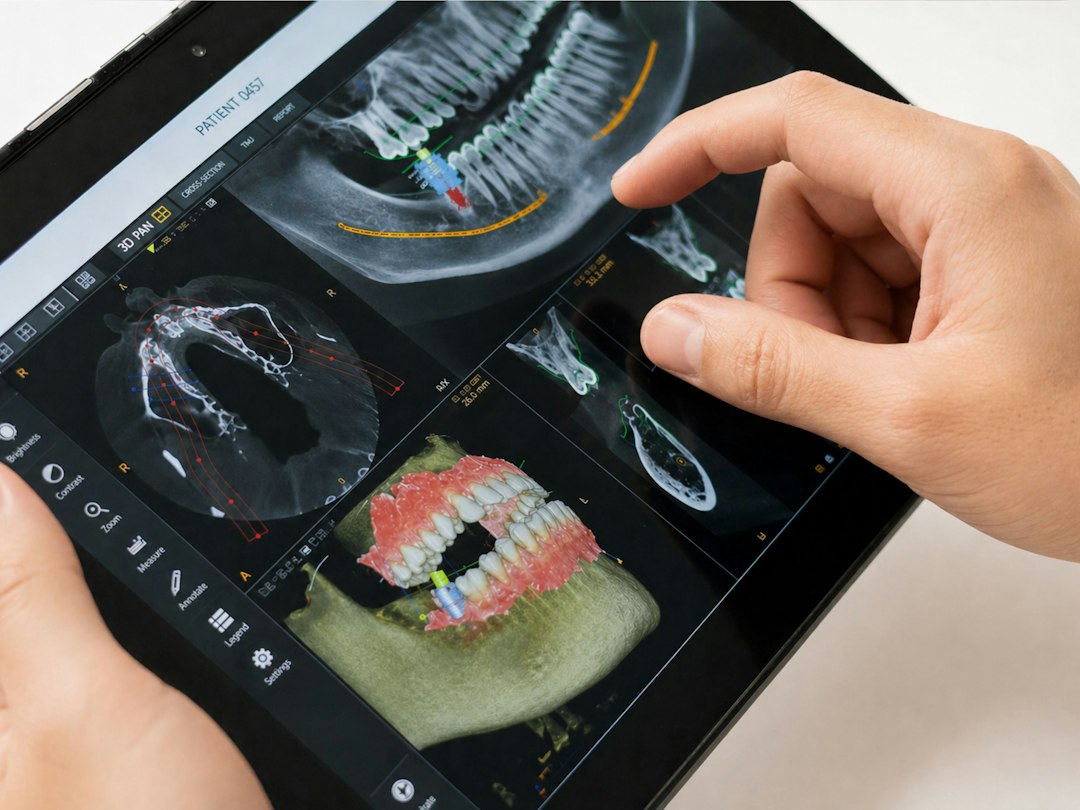
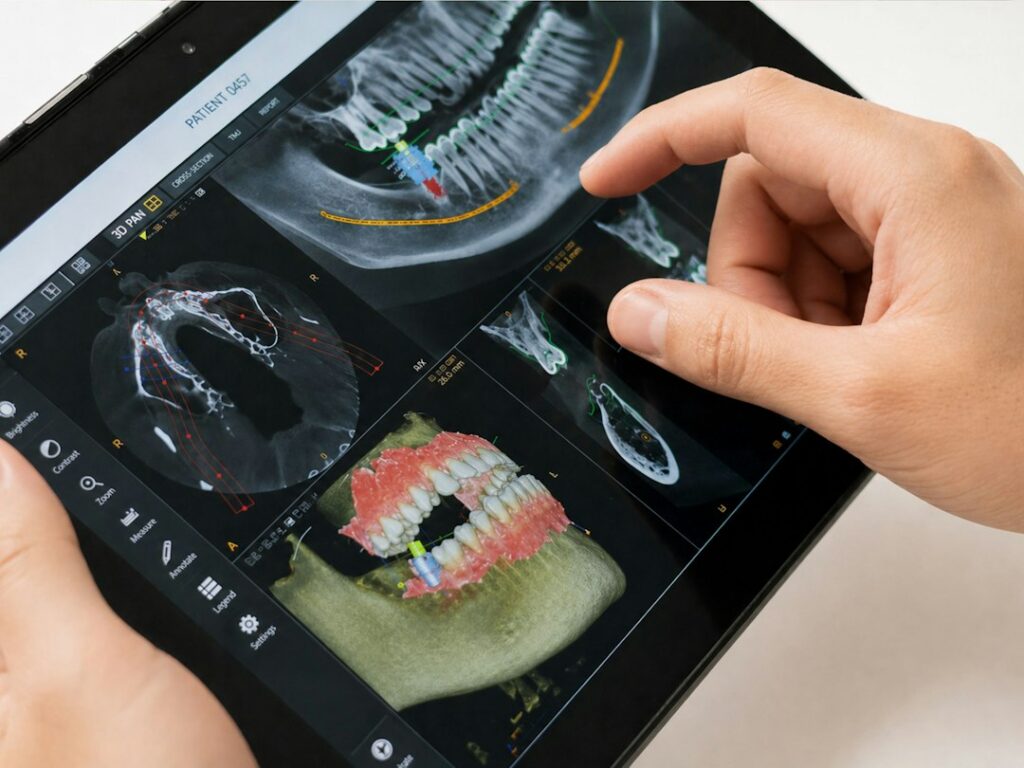
Standard two-dimensional dental X-rays provide helpful basic information, but dental implant planning requires a far more sophisticated approach. During your appointment, we utilize advanced Cone Beam Computed Tomography (CBCT) to capture a high-resolution 3D scan of your mouth and facial structure.
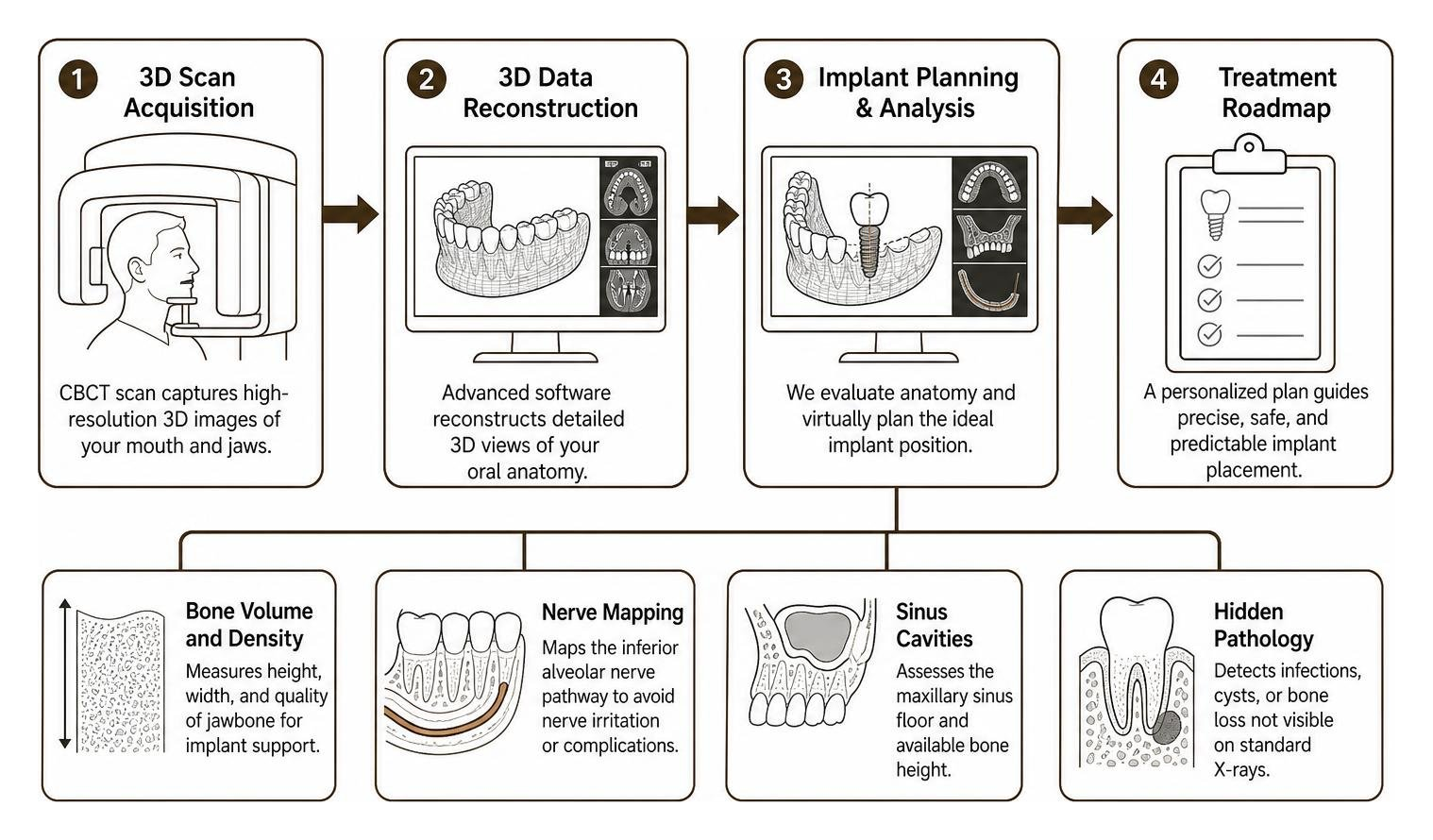
This advanced 3D scan gives us a comprehensive, three-dimensional view of your oral anatomy:
- Bone Volume and Density: We measure the precise height, width, and structural quality of your jawbone to ensure there is adequate support for an implant post.
- Nerve Mapping: In the lower jaw, we trace the exact pathway of the inferior alveolar nerve to avoid nerve irritation or complications during placement.
- Sinus Cavities: For upper arch restorations, we inspect the location of your maxillary sinus floor to confirm whether there is sufficient bone height beneath it.
- Hidden Pathology: The scan allows us to detect underlying infections, chronic cysts, or localized bone resorption that might not be visible during a visual exam.
Key Candidacy Factors Evaluated at Your Visit

Achieving long-term success with dental implants requires a sturdy biological foundation. Think of an implant like the foundation of a home—it must be anchored into stable, healthy ground to withstand daily chewing forces. During your visit, our team conducts a thorough evaluation of your structural and periodontal health. For patients traveling from nearby Hyrum or across Cache Valley, this detailed assessment ensures that any treatment we provide is built to last for decades.
Health Factors Reviewed in a Dental Implant Consultation
To determine if you are ready for implant surgery right now, we look closely at several foundational health factors:
- Bone Density and Volume: Following tooth loss, the alveolar bone naturally begins to resorb due to lack of stimulation. Sufficient bone mass is essential to achieve primary stability.
- Periodontal Health: Healthy gum tissue is necessary to protect the implant from oral bacteria. Active gum disease (periodontitis) must be managed before placing implants.
- Systemic Health Conditions: Controlled systemic conditions generally do not prevent implant placement. However, uncontrolled diabetes or active autoimmune conditions can slow healing and increase the risk of infection.
- Smoking and Tobacco Use: Nicotine restricts blood flow to oral tissues and can slow the bone integration process. While smoking does not automatically disqualify you, reducing or pausing tobacco use greatly improves success rates.
- Ongoing Preventive Care: Maintaining routine general dentistry care ensures that your teeth and gums remain stable before, during, and after implant placement.
Solutions for Low Bone Density and Gum Health
If your diagnostic scan indicates bone loss or gum inflammation, that does not mean you cannot get implants. It simply means we may need to complete some preparatory steps first to ensure a stable outcome.
| Preparatory Procedure | Primary Purpose | Ideal Candidate | Healing Timeline |
|---|---|---|---|
| Bone Grafting | Rebuilds localized bone width and height using biocompatible graft material | Patients with bone resorption from previous extractions or missing teeth | 3 to 6 months prior to or during implant placement |
| Sinus Augmentation (Sinus Lift) | Gently elevates the sinus membrane and adds bone beneath the maxillary sinus | Patients needing upper molar or premolar implants with minimal bone height | 4 to 9 months for full bone integration |
| Periodontal Therapy | Deep cleaning (scaling and root planing) to eliminate bacterial infections | Patients showing signs of active gingivitis or periodontitis | 4 to 8 weeks of tissue healing and re-evaluation |
| Ridge Expansion | Widens a narrow jawbone ridge to accommodate standard implant diameters | Patients with narrow alveolar ridges lacking sufficient horizontal thickness | Performed alongside or shortly before implant placement |
Treatment Pathways and Customization Options Discussed
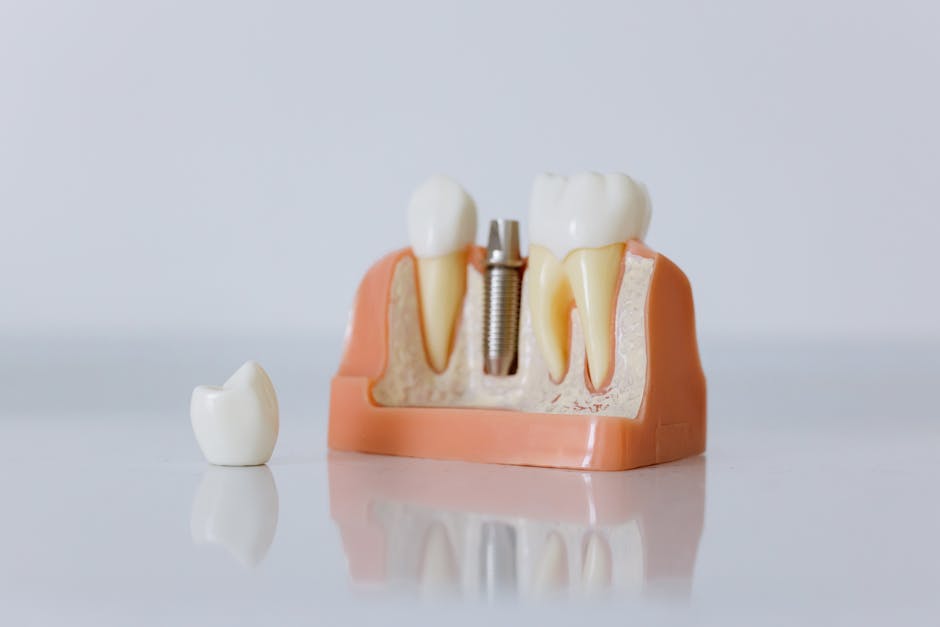
No two smiles are identical, and your restoration plan should reflect your unique anatomy, lifestyle, and aesthetic goals. During our discussion, we present tailored solutions designed to restore full chewing function and natural beauty.
Exploring Restorative Options at Your Dental Implant Consultation
Depending on how many teeth you need to replace, we may explore several restorative pathways:
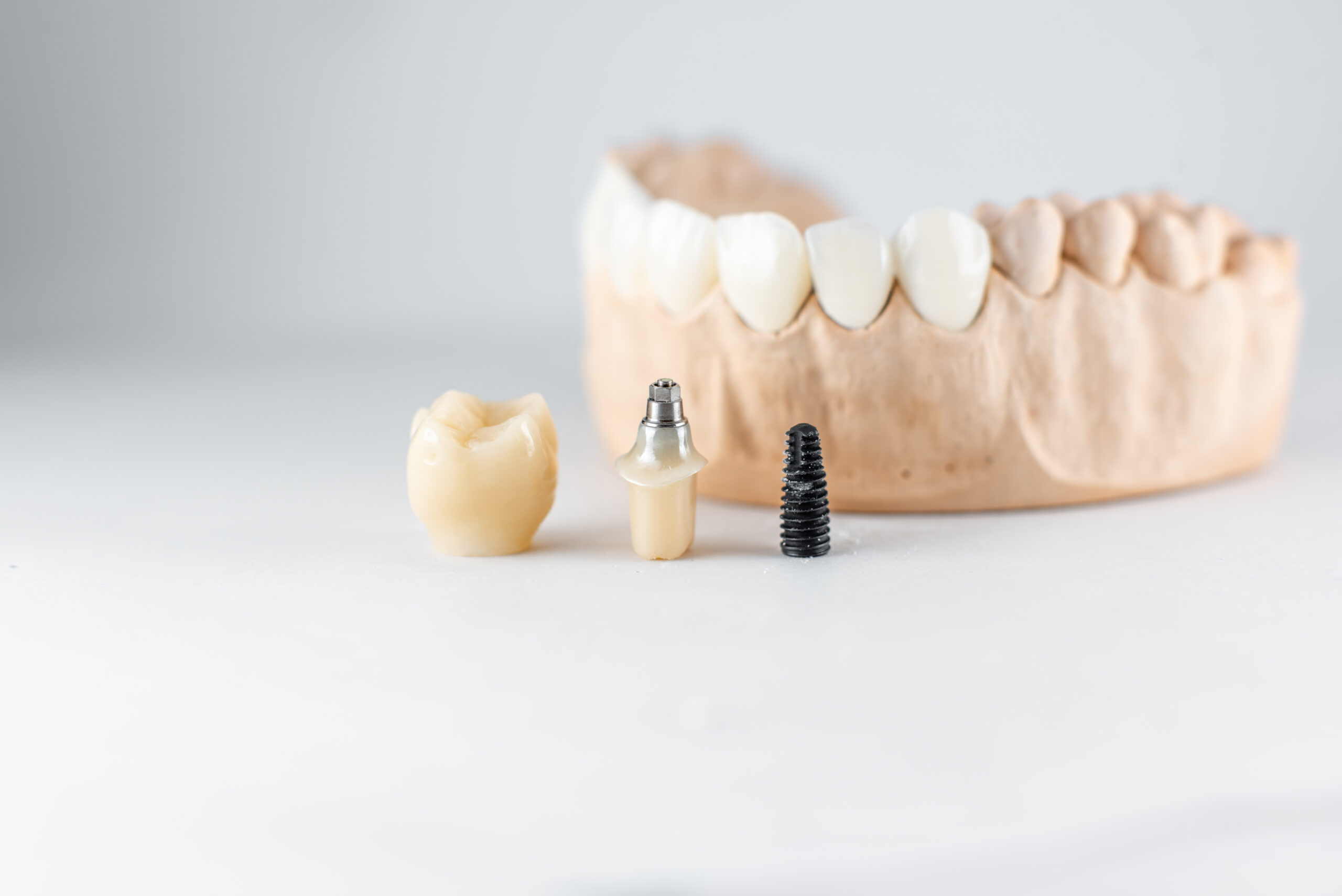
- Single-Tooth Implants: A standalone titanium post topped with a custom abutment and a lifelike ceramic crown. This option replaces an individual tooth without altering the adjacent healthy teeth.
- Implant-Supported Bridges: If you are missing several consecutive teeth, two or more implants can anchor a durable bridge. This eliminates the need for a removable partial denture.
- Full-Arch Restorations: For patients missing most or all of their teeth on an upper or lower arch, we can secure a full prosthetic arch onto four to six strategically placed implants.
- Comprehensive Smile Upgrades: We combine permanent dental implant solutions with modern cosmetic dentistry enhancements to match the exact shade, translucency, and contour of your natural teeth.
Same-Day Procedures and Sedation Dentistry Comfort
Many patients want to know if they can receive their replacement teeth quickly and comfortably. Depending on your bone density and stability, immediate-load implants may be an option, allowing a temporary, natural-looking restoration to be placed on the same day as your surgery.
We also recognize that dental anxiety is common. To make your treatment relaxing and stress-free, we provide relaxing sedation dentistry options. From light conscious sedation to deeper relaxation methods, our team ensures you remain completely comfortable throughout every step of your care.
Understanding Treatment Costs, Timeline, and Post-Care
A comprehensive consultation should always include transparent discussions about your treatment phases, flexible payment options, and the recovery process. Because every treatment plan is personalized, the investment depends on the number of implants, any needed preparatory work (such as bone grafts or extractions), and the type of final restoration you select.
To make treatment accessible, flexible financing plans are available through reputable healthcare lenders such as Cherry, Proceed Finance, and Sunbit. These options allow you to break your overall care into predictable, budget-friendly monthly payments.

Understanding what happens after surgery helps ensure a smooth, comfortable recovery. The long-term success of your implant relies on osseointegration—the natural biological process where your jawbone fuses directly to the titanium implant post.
- Initial 24 to 48 Hours: Focus on resting, applying cold compresses to manage minor swelling, and taking prescribed or over-the-counter pain relievers as directed.
- First 1 to 2 Weeks: Maintain a soft-food diet (such as yogurt, soups, eggs, and smoothies) to avoid putting direct chewing pressure on the surgical site.
- Ongoing Hygiene Routine: Keep your mouth clean by gently rinsing with warm salt water or an antimicrobial mouthwash, while carefully brushing around adjacent teeth.
- Osseointegration Period (3 to 6 Months): As the bone integrates around the implant post, you will attend brief follow-up checks so we can monitor your healing before crafting your permanent crown or bridge.
Frequently Asked Questions About Dental Implant Visits
Below are answers to common questions our Cache County patients ask when preparing for their first visit. For additional details, you can browse our helpful frequently asked questions page.
Can I move forward with implant placement on the same day?
In most cases, your initial consultation is reserved for comprehensive diagnostic 3D imaging, clinical exams, and careful treatment planning. Same-day implant placement is typically considered only if you have robust jawbone density, healthy gums, and do not require prior bone grafting or deep infection clearance. If you are an ideal candidate for immediate placement, we will outline that timeline during your visit.
What financing options are available for dental implants?
We believe high-quality dental care should be manageable for your budget. During your appointment, our treatment coordinator will provide a clear breakdown of your personalized plan. We work with third-party healthcare financing partners like Cherry, Proceed Finance, and Sunbit to offer flexible monthly payment options. We also help you maximize any applicable dental insurance benefits for exams, extractions, or restorations.
What post-operative care is required after implant surgery?
Post-operative care is straightforward and manageable. You will need to eat soft foods for the first couple of weeks, avoid using straws or smoking, and follow gentle oral hygiene practices to keep the area clean. Regular preventive cleanings with your trusted general family dentist are essential to ensure the gum tissue around your new restoration remains healthy for life.
Conclusion
Taking the first step toward restoring your smile should feel empowering, transparent, and completely comfortable. A comprehensive consultation provides the exact diagnostic roadmap you need—giving you complete visibility into your bone health, personalized treatment options, flexible payment plans, and post-care expectations.
Our team brings over 20 years of experience, modern dental technology, and a warm, personalized touch to every patient we serve across Cache Valley, including Logan, Smithfield, Hyrum, and North Logan. If you are ready to replace missing teeth and regain a strong, functional bite, contact our Logan team today. We invite you to schedule your initial evaluation with Gentle Family Dental Care in Logan, Utah and take the first step toward a healthy, lasting smile.