Why Eco-Friendly Digital X-Rays Matter for Your Family
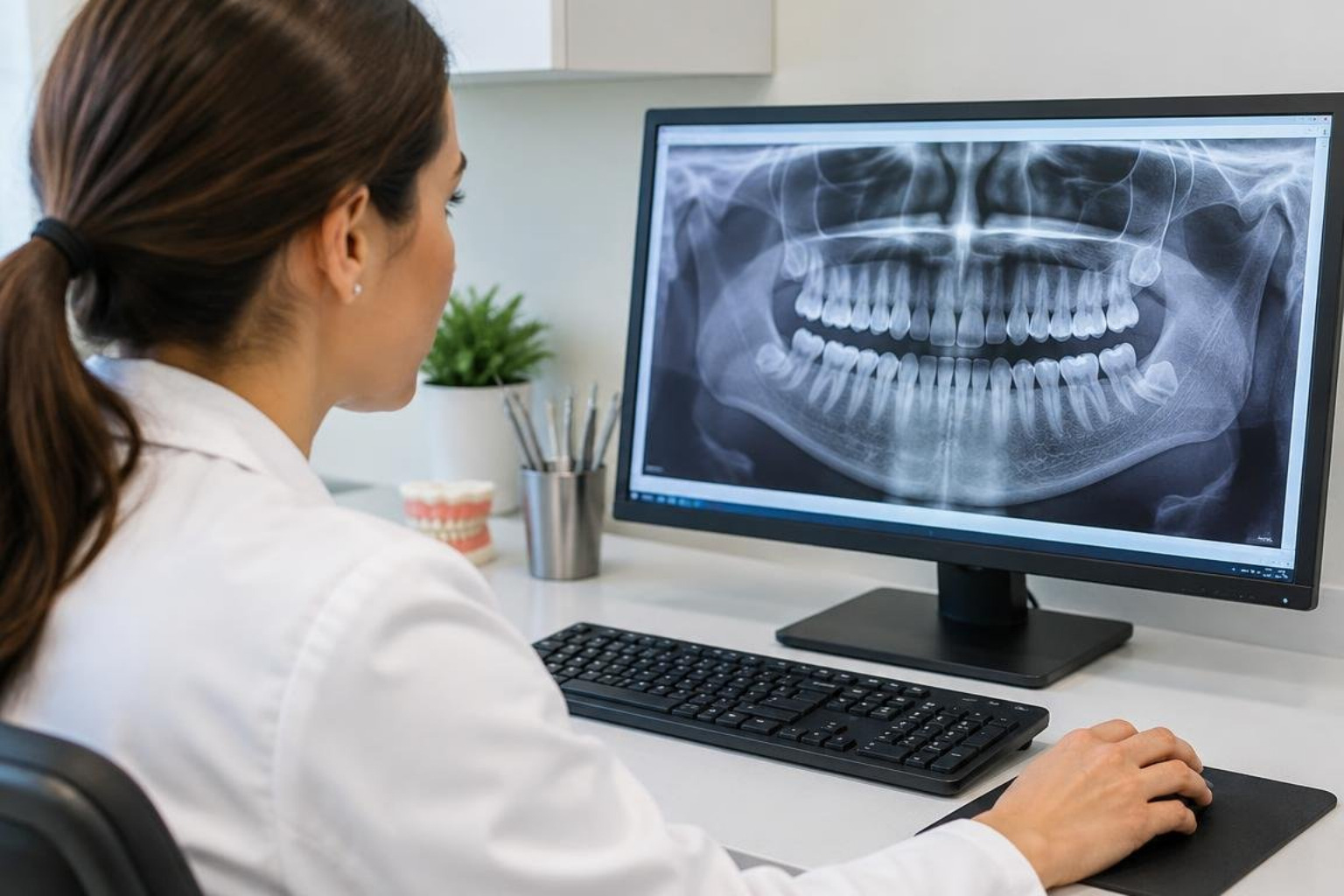
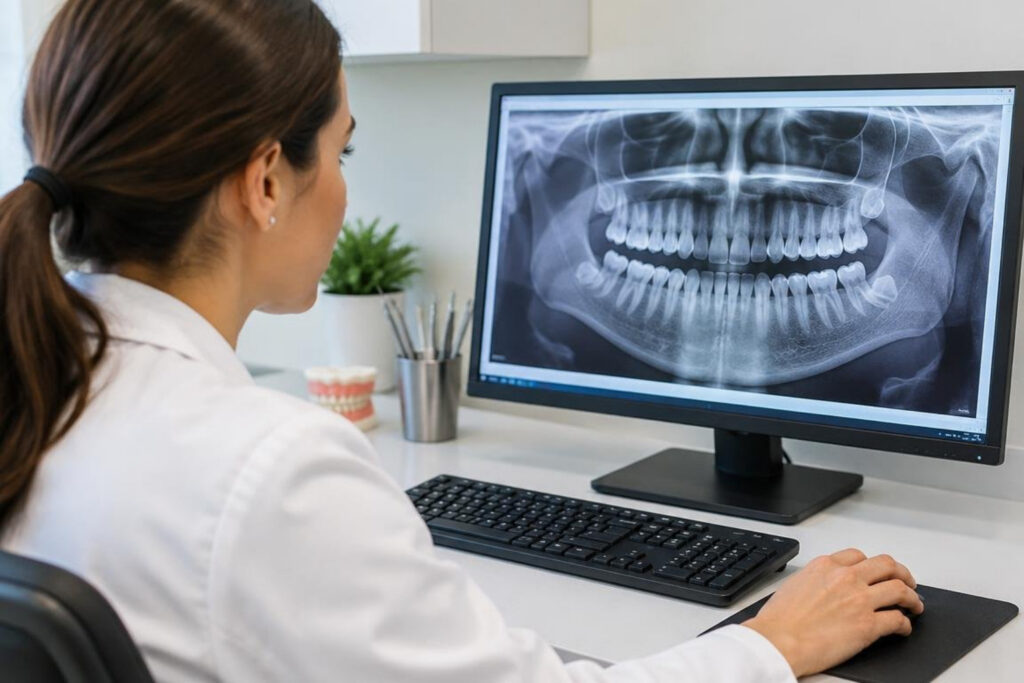
Digital dental X-rays can be a greener choice than film X-rays. They capture images without film or the chemical developer and fixer used to process it. Images appear quickly on a screen, and the right digital settings can help keep radiation exposure low while giving your dentist the detail needed for care.
For families in Logan and across Cache Valley, including North Logan, Smithfield, and Hyrum, that means less processing waste without giving up useful dental images. Choosing an eco-friendly digital X-ray system is one way modern dentistry supports both patient health and environmental responsibility. Gentle Family Dental Care can help you understand when an X-ray is needed and what it will show.
The Environmental Pitfalls of Traditional Film Radiography
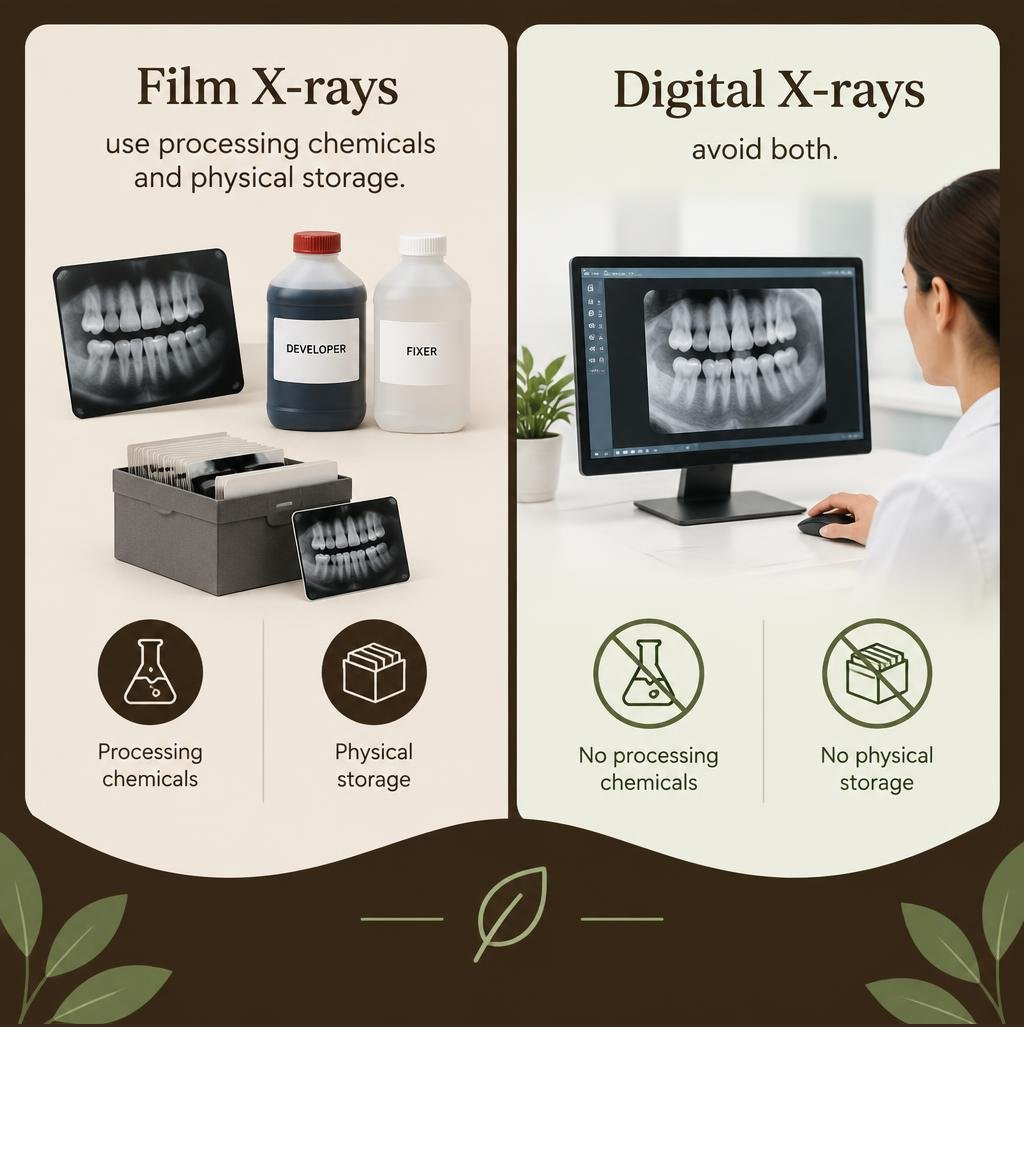
For decades, traditional film radiography served as the standard diagnostic foundation across medicine and dentistry. However, capturing images on photographic film creates an overlooked ecological burden. Every single traditional radiograph requires a cascade of single-use consumables and caustic chemicals simply to produce a readable image.
First, developing film requires caustic chemical developers and acidic fixing solutions containing ammonium thiosulfate and hydroquinone. These solutions dissolve silver halide crystals embedded in the film emulsion. Over time, spent fixer accumulates heavy silver concentrations, converting the bath into regulated hazardous liquid waste. If improperly disposed of down municipal drains, these compounds disrupt aquatic ecosystems and contaminate local water tables.
Beyond liquid chemistry, conventional film packets generate solid waste streams:
- Lead Foil Disposal: Every analog dental film packet includes a small protective lead wafer designed to prevent backscatter radiation. Millions of these small lead sheets enter waste streams yearly, demanding specialized disposal protocols to prevent heavy metal contamination.
- Plastic and Paper Wrapping: Individual vinyl packets, paper light-barriers, and bite-wing tabs are discarded after a single diagnostic exposure.
- High Water Consumption: Traditional darkroom processors require continuous freshwater rinsing baths to clean lingering chemical residues off developed film sheets.
- Physical Archival Requirements: Film records demand temperature-controlled physical storage rooms, non-recyclable plastic mountings, and dedicated courier logistics for inter-office record transfers, driving up the carbon footprint of diagnostic care.
Why Switching to an Eco-Friendly Digital X-Ray System Matters for Modern Healthcare
Transitioning to modern digital sensors transforms medical diagnostics by replacing manual, chemical-heavy processing with clean electronic workflows. When we adopt an eco-friendly digital X-ray approach, diagnostic clarity improves while our ecological footprint shrinks.
| Diagnostic Parameter | Traditional Film Radiography | Digital Radiography (DR) |
|---|---|---|
| Chemical Processing | Requires toxic developer and fixer solutions | 100% chemical-free electronic sensor capture |
| Heavy Metal Waste | Generates lead foil inserts per packet | Zero lead packet waste; recyclable solid-state sensors |
| Radiation Exposure | Baseline conventional dosage | Reduced by up to 80% to 90% |
| Image Availability | 5 to 10 minutes developing time | Near-instant (seconds) computer screen rendering |
| Resource Efficiency | Water-intensive rinsing and darkroom cooling | Up to 30% lower energy use with modern sleep modes |
| Record Keeping | Physical film sleeves, plastic mounts, paper charts | Seamless integration with secure electronic health records |
Whether updating imaging during routine dental hygiene visits or planning restorative procedures, digital imaging provides instant results. Industry innovators highlight these eco-conscious designs in initiatives like Sustainable Solutions for Xray, demonstrating how solid-state radiography eliminates toxic waste streams entirely.
How Eco-Friendly Digital X-Ray Technology Reduces Energy Consumption
Medical imaging equipment accounts for significant energy consumption within clinical settings. Digital radiography addresses this demand through intelligent system architecture. Modern digital systems save up to 30% more energy compared to conventional systems, while specific mobile eco-designed systems achieve over 50% energy reductions as documented in manufacturers’ Environmental Product Brochure publications.
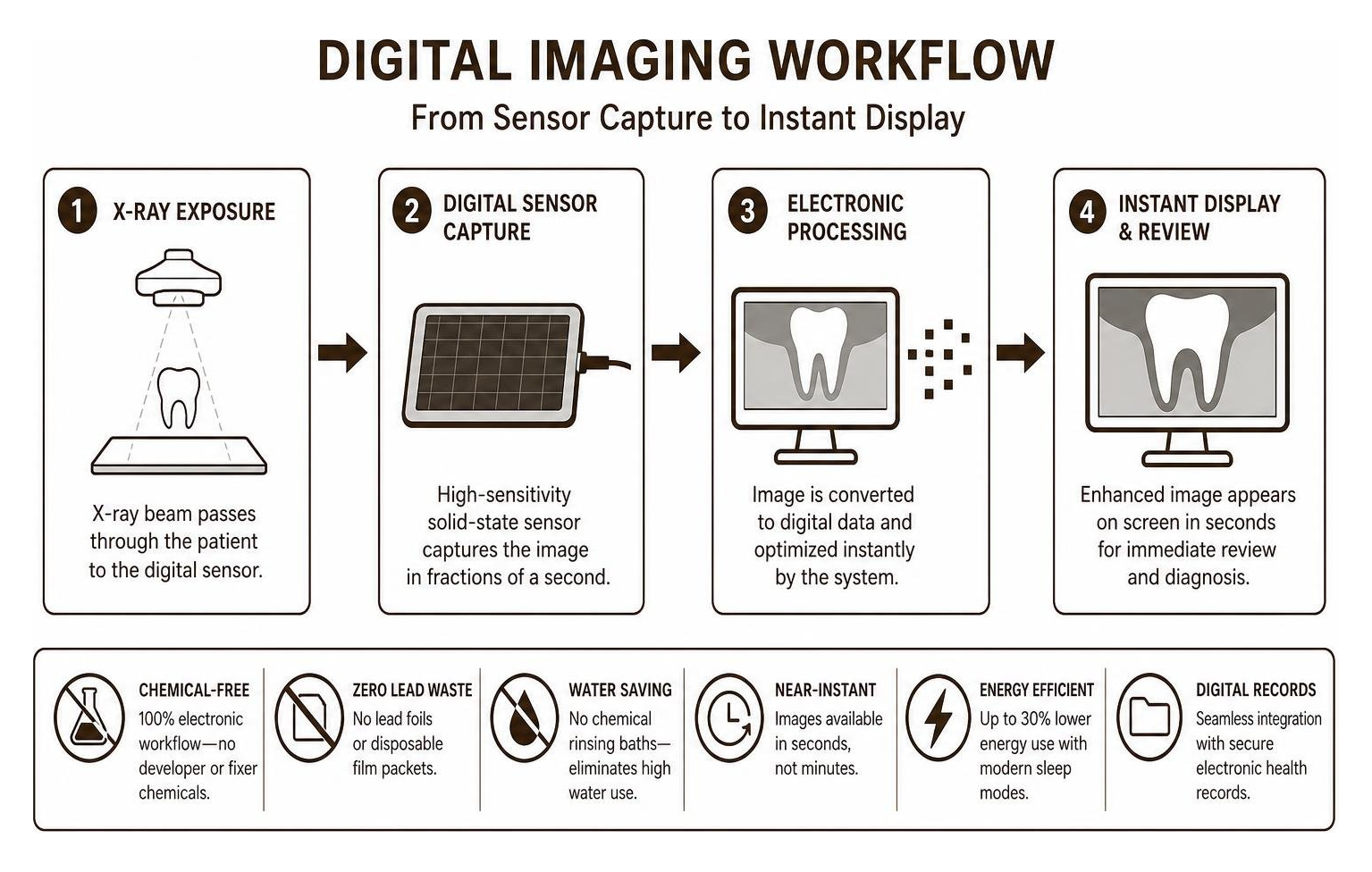
Digital radiography units incorporate several energy-conserving mechanisms:
- Smart Standby & Deep Sleep Modes: Instead of drawing steady power while waiting between appointments, digital units enter low-wattage resting states that consume minimal electricity.
- Ultra-Fast Solid-State Exposure: High-sensitivity flat-panel detectors capture diagnostic detail in fractions of a second, substantially shortening X-ray tube activation times.
- Reduced Heat Output: Shorter exposure cycles minimize thermal stress on the X-ray tube, lowering the energy needed for operatory climate control and equipment cooling.
- Instant Capture Architecture: By rendering scans directly to high-definition monitors, digital units eliminate the electrical power needed to heat and cycle mechanical darkroom rollers and chemical drying fans.
Designing an Eco-Friendly Digital X-Ray Practice with Lead-Free Shielding
Radiation protection has also evolved toward sustainability. While lead aprons have traditionally shielded patients from secondary scatter radiation, discarded lead creates toxic disposal hazards.
Modern dental facilities are integrating recyclable, non-toxic shielding alternatives:
- Bismuth and Antimony Formulations: These lightweight elemental metals offer high attenuation properties against diagnostic X-rays without the toxic profile of traditional lead.
- Tungsten Polymer Composites: Offering dense, flexible barrier protection, tungsten composites provide durable shielding for both adult and pediatric protective gear.
- Barium Sulfate Compounds: Non-toxic barium matrices effectively absorb scatter radiation and can be melted down or repurposed at end-of-life without posing environmental risks.
By replacing traditional lead vinyl aprons with these modern, recyclable materials, practices ensure that patient safety and environmental stewardship work hand-in-hand.
Core Clinical and Sustainable Benefits of Going Digital
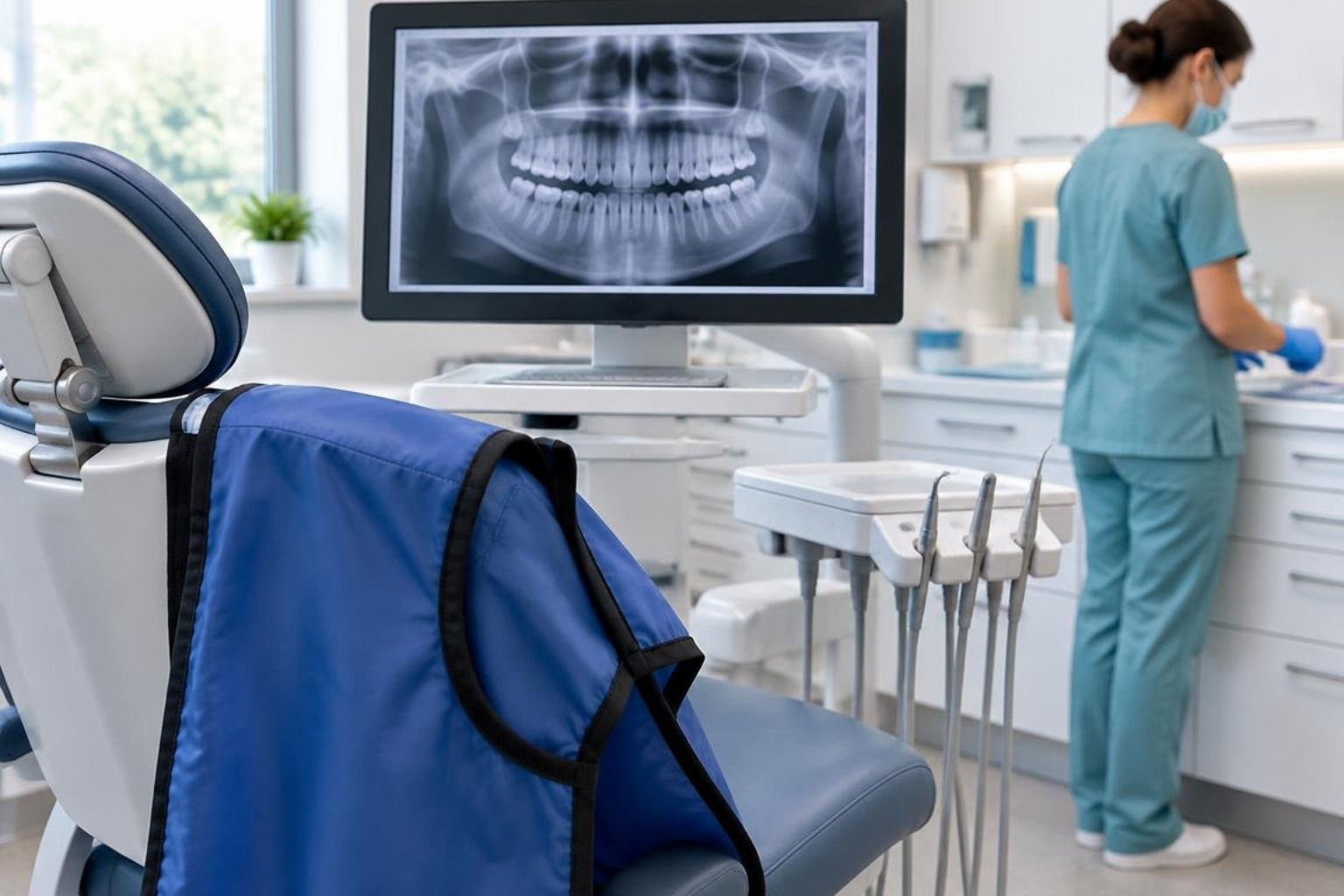
Beyond environmental benefits, digital sensors enhance the patient experience. According to the American Dental Association, digital radiographs reduce patient radiation exposure by up to 80% to 90% compared to conventional film techniques. This enables clinicians performing comprehensive general dentistry to capture detailed diagnostic views with a fraction of the radiation.
Software Innovations and AI Dose Optimization
Software advances have elevated digital diagnostic imaging far beyond simple film replacement. Sophisticated computer algorithms allow clinicians to maximize diagnostic precision while keeping radiation levels as low as reasonably achievable:
- Automatic Exposure Control (AEC): Sensor software monitors incoming photon levels and terminates the exposure instantly once sufficient detail is captured, preventing overexposure and unnecessary energy draw.
- AI Noise Reduction and Sharpening: Advanced artificial intelligence engines can reduce image noise by up to 50%, allowing clinicians to use lower exposure settings while obtaining crystal-clear views of enamel margins, root structures, and bone levels.
- Metal Artifact Reduction (MAR): Software filters out scatter distortions caused by existing crowns, fillings, or orthodontic appliances, eliminating the need to take repeat scans.
- Real-Time Contrast and Zoom: Clinicians can adjust exposure contrast, enlarge specific tooth roots, and highlight periodontal bone levels directly on the monitor, ensuring high diagnostic accuracy from a single exposure.
Long-Term Cost Savings and Practice Efficiency
Adopting digital radiography streamlines overall clinical operations. Eliminating film stock, developing chemistry, fixer neutralizers, and darkroom cleaning supplies removes significant recurring consumable waste.
Digital records also integrate directly into paperless practice management systems. Images transfer immediately to operatory displays where patients can see what the doctor sees, supporting clear communication. Without the delays of darkroom chemical baths, routine appointments move efficiently, saving time for both providers and families.
Global Adoption Trends and Overcoming Implementation Barriers
The healthcare sector generates a notable share of global carbon emissions, and diagnostic imaging is a key target for sustainable reform. A multi-country survey of radiographers (Abuzaid et al., 2025) revealed that 45.1% of imaging professionals understand healthcare sustainability concepts, while 46.7% recognize its benefits. Digital documentation to reduce paper waste emerged as the most common eco-friendly practice (34.6%), alongside daily active energy reduction efforts (32.2%).

However, the global shift toward green radiography encounters several operational hurdles:
- Initial Capital Investment: Financial constraints remain a primary barrier for 44.7% of surveyed healthcare departments (Abuzaid et al., 2025). In low-resource settings, facilities sometimes rely on older film units because transitioning to digital arrays requires upfront infrastructure updates.
- Training and Educational Gaps: Nearly 39.2% of professionals report a lack of structured training regarding sustainable imaging protocols (Abuzaid et al., 2025).
- Managerial and Institutional Support: Approximately 39.2% cite insufficient leadership backing for green initiatives (Abuzaid et al., 2025).
- Regional Variations: Sustainability adoption varies widely across borders based on local regulations, available funding, and access to equipment recycling networks (Abuzaid et al., 2025).
As knowledge gaps close and modern digital equipment becomes more accessible, healthcare providers worldwide are moving toward safer, lower-waste diagnostic standards. For patients in Logan and Cache Valley, this means access to eco-friendly digital X-ray technology that supports both accurate diagnosis and a cleaner environment.
Frequently Asked Questions About Eco-Friendly Digital Radiography
How do digital X-rays eliminate hazardous chemical waste?
Digital radiography replaces chemical darkrooms with reusable solid-state electronic sensors. In traditional film development, liquid fixers strip silver halide crystals from the film emulsion, creating a hazardous liquid waste mixture that requires licensed hazardous waste recovery. Digital sensors capture photon data electronically and translate it directly into image pixels on a computer screen, generating zero liquid chemical waste, zero wastewater runoff, and no spent chemical packaging.
Are digital X-rays safer for patients and the environment?
Yes. Digital radiographs lower radiation exposure by up to 80% to 90% compared to traditional film-based units, making them significantly safer for children, adults, and vulnerable patients. Environmentally, digital imaging eliminates lead foil backing sheets from landfill streams, prevents chemical runoff, and removes the physical paper and plastic sleeves used in traditional filing systems.
How does modern imaging software reduce energy use during exams?
Modern imaging software works in tandem with smart hardware to minimize energy consumption through:
- Automatic Exposure Cutoff: Exposure times stop instantly when the electronic detector registers sufficient diagnostic contrast.
- Intelligent Low-Power Sleep States: Equipment powers down into energy-conserving standby modes during operatory downtime.
- Image Processing Filters: Software sharpening reduces retakes caused by under-penetration or motion blur.
- Optimized Scintillator Sensitivity: Cesium iodide (CsI) detectors convert X-ray photons into clear digital images with minimal wattage.
Conclusion
Advancements in digital dental imaging prove that clinical precision and environmental responsibility can work together. By eliminating caustic processing chemicals, cutting hazardous lead waste, reducing electricity demand, and lowering radiation exposure by up to 90%, digital radiography provides a cleaner diagnostic approach for both patients and the planet.
At Gentle Family Dental Care, we provide modern diagnostic care with an eco-conscious focus for families in Logan, UT, as well as our neighboring communities across Cache Valley, including Smithfield, North Logan, and Hyrum. Our practice combines advanced diagnostic technology with a gentle, patient-focused experience. To learn more about our comprehensive approach or to schedule an appointment, explore our modern dental services today.
References
Abuzaid M, Almuqbil N, Emery CV, Elshami W, Ibham M, Alsubaie N, Hamd Z, Aljamal M. “Bridging the gap in sustainable radiography: insights from five countries in Asia and Africa..” BMC health services research, 2025. PMCID PMC11916605.