Act Fast After a Broken Dental Crown
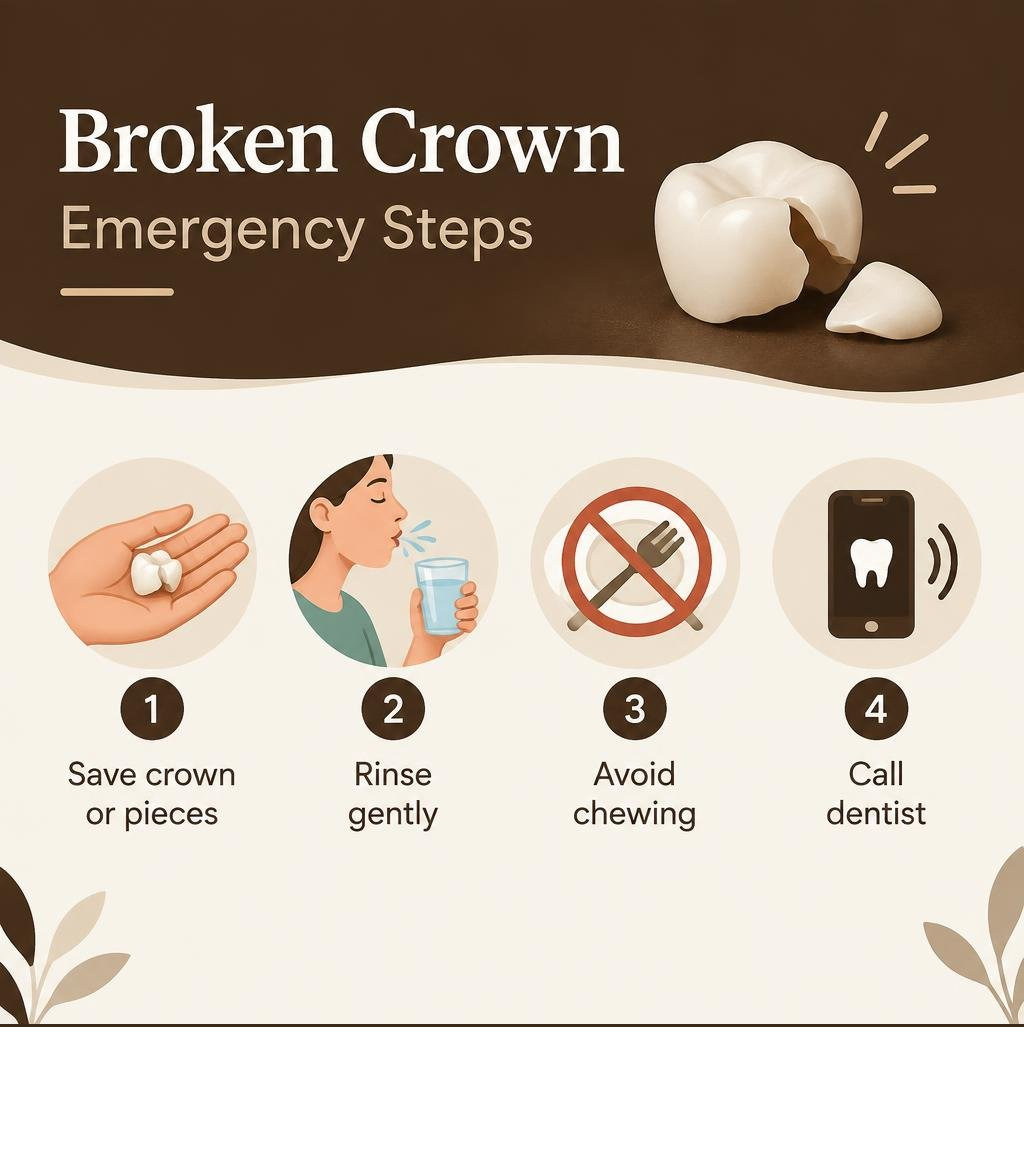
A broken dental crown emergency needs quick, calm action. Save any loose crown or pieces, rinse your mouth gently with warm water, avoid chewing on that side, and call a dentist. Do not use superglue or other household adhesives.
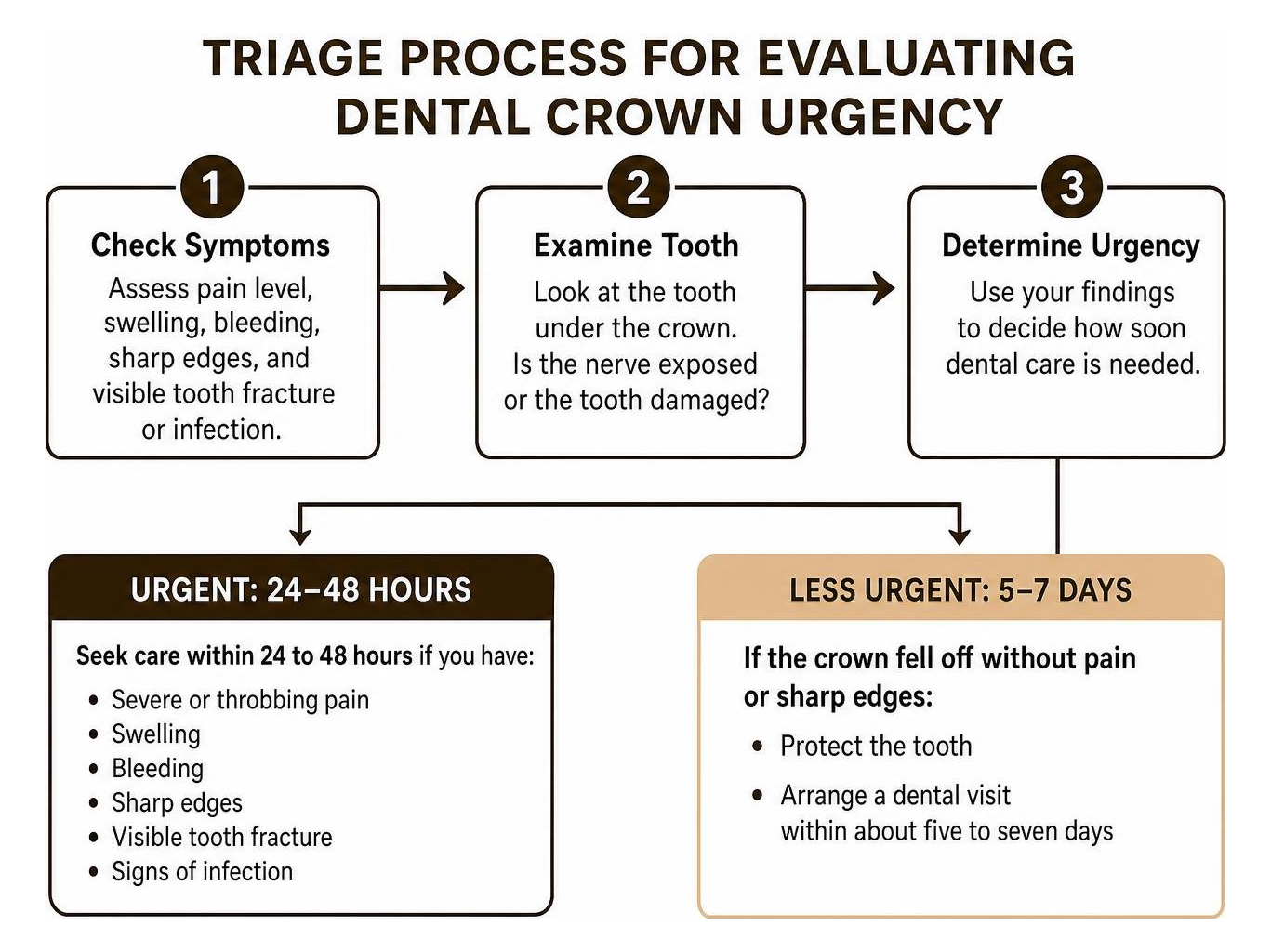
Seek dental care within 24 to 48 hours if you have severe or throbbing pain, swelling, bleeding, sharp edges, a visible tooth fracture, or signs of infection. If the crown fell off without pain or sharp edges, protect the tooth and arrange a visit within about five to seven days.
Crowns often last 10 to 15 years, but cement can wear down and teeth can develop decay or cracks underneath. Prompt care may allow the crown to be re-cemented instead of replaced.
For families in Logan and across Cache Valley, including Smithfield, Hyrum, and North Logan, Gentle Family Dental Care can assess the tooth, explain the options clearly, and help protect your smile from further damage.
When to Treat a Damaged Cap as a Broken Dental Crown Emergency
Dental crowns serve as custom helmets for compromised teeth, shielding vulnerable dentin and inner nerves from the intense pressure of daily chewing. When that protective barrier fractures, chips, or pops off entirely, it is completely normal to feel a sudden wave of panic. However, understanding the difference between an immediate crisis and a manageable dental issue helps you respond effectively.
Triage begins with evaluating your pain levels, the physical condition of the underlying tooth stub, and whether soft tissues are at risk. If you notice severe discomfort, actively bleeding gums, or exposed nerves that make breathing room-temperature air excruciating, scheduling prompt emergency dental care in Logan within 24 to 48 hours is critical. Prompt action helps our team stabilize the tooth, prevent rapid bacterial invasion, and relieve pain before complications escalate.
Identifying an Urgent Broken Dental Crown Emergency
Some crown failures demand fast clinical attention. The inner core of your tooth houses living pulp tissue, full of sensitive blood vessels and nerve fibers. When a crown fractures or dislodges completely, several red-flag symptoms signal an urgent situation:
- Severe, Throbbing Pain: Constant, pulsating discomfort indicates that the nerve is irritated, inflamed, or directly exposed to the oral environment.
- Facial or Gum Swelling: Puffiness near the tooth or visible swelling along the jawline suggests an underlying infection or abscess that requires prompt intervention.
- Visible Tooth Fractures: If part of the natural tooth structure broke away along with the crown, the tooth is at risk of fracturing beneath the gumline.
- Jagged, Sharp Margins: Sharp porcelain or jagged tooth edges can quickly cause tissue laceration to your tongue, cheeks, or lips.
- Direct Oral Trauma: If your restoration came loose due to a fall, sports collision, or direct blow to the face, surrounding bones and teeth need evaluation.
In these circumstances, leaving the tooth uncovered can quickly turn a straightforward repair into a complex procedure.
Non-Urgent Situations and Safe Waiting Windows
Not every crown complication requires a same-day visit. If your crown popped off cleanly while eating a piece of sourdough bread and you feel zero pain, no swelling, and no jagged edges bothering your soft tissue, take a deep breath.
When structural stability remains intact and the tooth underneath has had prior root canal therapy (meaning the nerve is no longer active), up to five to seven days is generally a safe window to arrange an appointment. While the tooth is stable, you still need to have it addressed promptly; leaving any exposed prep without a crown allows adjacent teeth to shift and permits oral bacteria to collect along the margins.
Similarly, if you experience a minor cosmetic porcelain chip on a front tooth that causes no functional problems or sensitivity, it can typically wait for a standard appointment. Assessing your symptom profile helps you choose the right timeframe for professional treatment.
Immediate First-Aid Steps in the First 24 Hours
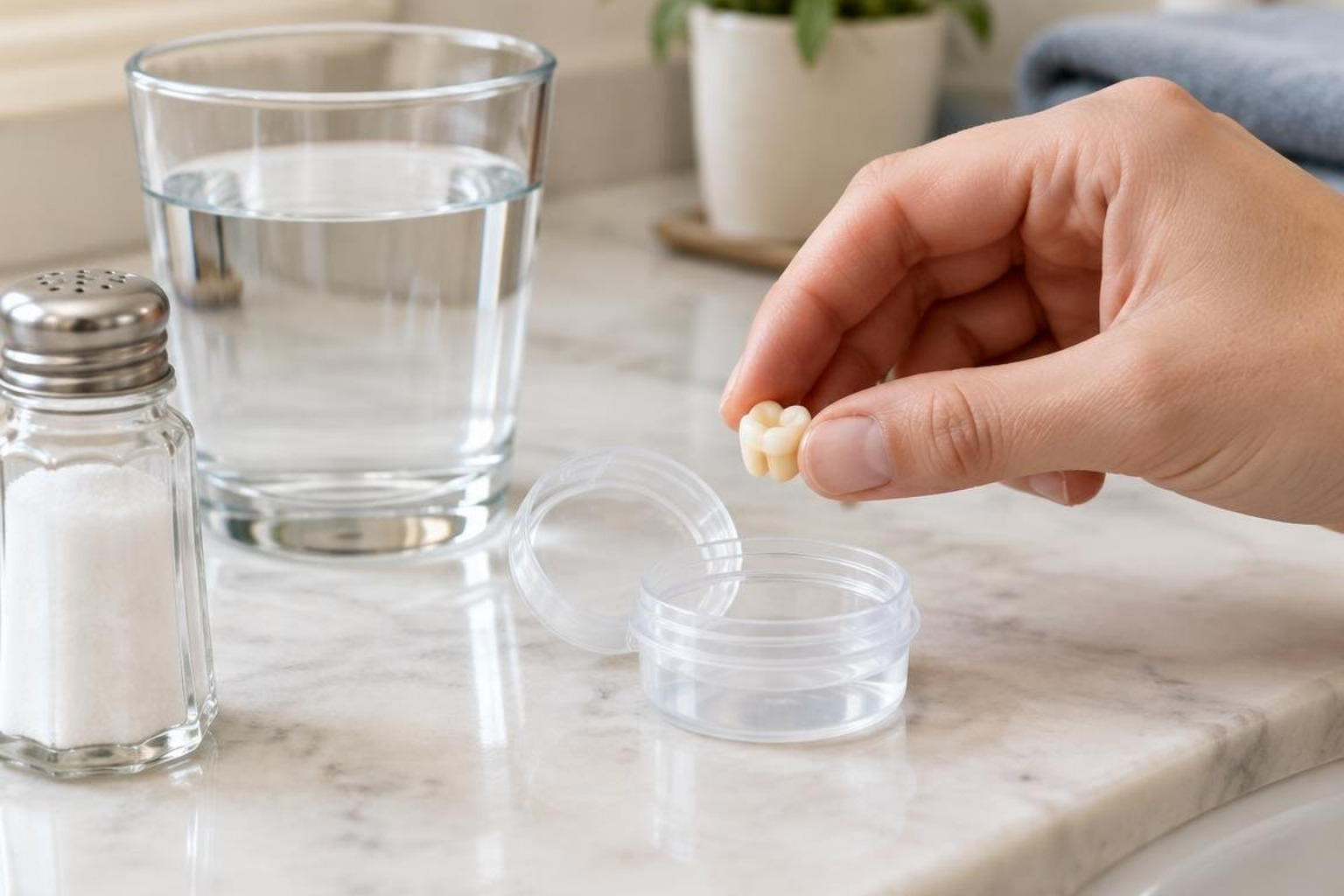
What you do during the first day following a crown mishap plays a major role in whether we can save and reuse your existing restoration. Follow these essential first-aid steps:
- Retrieve the Crown Carefully: If the crown came off in your mouth, remove it immediately so you do not swallow or inhale it. Inspect it to see if it is intact or in broken pieces.
- Store It Safely: Rinse the crown gently under warm water to remove food debris. Place it in a clean, sturdy container, such as a plastic medicine bottle or a sealed zip-top bag lined with a clean tissue.
- Perform a Warm Saltwater Rinse: Dissolve half a teaspoon of salt in a glass of warm water and swish gently around your mouth. This helps cleanse the area, soothes tender gums, and limits bacterial buildup around the exposed prep.
- Adjust Your Diet Immediately: Shift all chewing entirely to the opposite side of your mouth. Avoid hard, crunchy, chewy, or sticky foods that could fracture the remaining tooth stump.
- Call Gentle Family Dental Care: Contact our office right away to describe what happened so our team can schedule an appropriate visit.
Safe At-Home Temporary Protection
If your tooth feels sensitive to air or drafts, you can protect it using over-the-counter supplies found at any local pharmacy:
- Dental Wax: Placing a small bead of orthodontic wax over the exposed stump or sharp edge creates a smooth shield that prevents cuts to your tongue and inner cheek.
- Over-the-Counter Temporary Dental Cement: Available in the oral care aisle, temporary dental cement can seal the exposed tooth or gently seat a clean, intact crown in place for 24 to 48 hours. Use only a tiny dab, and never force the restoration down.
- Cold Compresses: If your cheek or jaw feels bruised or tender, apply an ice pack wrapped in a cloth to the outside of your face in 15-minute intervals to minimize inflammation.
- Pain Management: Over-the-counter anti-inflammatory analgesics such as ibuprofen or acetaminophen, taken according to package directions, can help ease mild to moderate ache until you arrive at our clinic.
Critical Mistakes to Avoid With Damaged Crowns
When managing a restoration at home, some well-intentioned DIY fixes can cause serious oral harm. Steer clear of these common pitfalls:
- Never Use Household Superglue: Superglue and craft adhesives are toxic to oral tissues. They cause chemical burns to the gums, destroy the delicate microscopic tubules of your tooth, and form an unyielding bond that prevents your dentist from properly cleaning and re-cementing your restoration.
- Do Not Force a Crown Back in Place: If an intact crown does not slide effortlessly onto the prep with light finger pressure, do not bite down to jam it into position. Biting down on an improperly seated crown can split the underlying natural tooth root vertically.
- Avoid Very Hot or Freezing Beverages: Exposed dentin tubules lead straight to the inner nerve chamber. Drinking ice water or steaming coffee can trigger intense, lingering zings of pain.
- Do Not Scrape the Tooth Prep: Never use toothpicks, metal tools, or fingernails to scrape away residual dental cement from your natural tooth stub.
Clinical Solutions for Restoring Damaged Teeth

When you arrive at Gentle Family Dental Care, our primary goal is to relieve any lingering discomfort and preserve as much of your natural tooth structure as possible.
Our clinical evaluation begins with a gentle physical examination and diagnostic digital x-rays. These images show us what is happening beneath the gumline, allowing us to evaluate the margins, check for recurrent decay under the original bonding, and verify that the tooth root is structurally sound. Clinical standards supported by the American Dental Association highlight that examining marginal fit and underlying decay is the key to determining whether a restoration can be re-bonded or requires replacement.
How Clinicians Manage a Broken Dental Crown Emergency
Depending on the condition of your crown and the underlying tooth, we use several restorative pathways:
- Crown Re-Cementation: If your crown is completely intact, fits cleanly over the tooth, and no decay has developed on the underlying structure, we clean both surfaces thoroughly and permanently bond the original restoration back into position.
- Same-Day Digital Restorations: If the original crown is cracked, shattered, or ill-fitting, we utilize advanced in-office digital milling to design, create, and seat brand-new same-day crowns in a single comfortable visit. This eliminates the need for messy impressions or weeks of wearing a fragile temporary cap.
- Bite and Occlusal Adjustments: Sometimes, natural shifts in your bite place excessive force on a specific cusp, causing the cement seal to break. We evaluate your bite dynamics and make micro-adjustments so your new restoration distributes chewing forces evenly.
Advanced Treatments for Severe Underlying Tooth Damage
When a crown breaks off due to extensive deep decay or underlying structural fracture, the tooth may require restorative therapies beyond a simple replacement cap:
| Restorative Treatment | Primary Clinical Indication | What the Procedure Involves |
|---|---|---|
| Crown Re-Cementation | Intact crown, healthy tooth structure, clean margins | Cleaning the prep and rebonding the existing restoration permanently. |
| New Crown Fabrication | Damaged, cracked, worn, or poorly fitting crown | Digital scanning and fabrication of a durable porcelain or zirconia crown. |
| Root Canal Therapy | Irreversible pulpitis, exposed nerve, internal infection | Clearing infected pulp tissue, sealing canals, and placing a protective crown. |
| Tooth Extraction & Implant | Severe vertical root fracture, non-restorable decay | Removing the unsavable tooth and placing a permanent, lifelike dental implant. |
If diagnostic x-rays reveal that bacteria have reached the inner nerve chamber, gentle root canal therapy removes the infected tissue, cleanses the root canals, and builds a stable foundation before placing a permanent crown.
In cases where a tooth has suffered a severe vertical root fracture below the bone line, saving the natural root may not be clinically viable. When this happens, we perform a comfortable gentle tooth extraction to eliminate infection, followed by a lifelike dental implant restoration that mimics both the root and crown of a natural tooth for lasting stability.
Frequently Asked Questions About Broken Dental Crowns
Can I eat normally if my dental crown broke or fell off?
You should not eat normally until your tooth has been clinically evaluated and repaired. Stick to a soft diet consisting of foods like applesauce, yogurt, scrambled eggs, and smoothies. Always chew entirely on the unaffected side of your mouth. Steer clear of sticky candies, tough meats, nuts, and extreme food temperatures that could dislodge a temporary fix or aggravate an exposed nerve.
How long can an exposed tooth go without a replacement crown?
While an asymptomatic tooth can safely wait about five to seven days while you schedule care, leaving a tooth uncovered longer than that invites trouble. Without the crown’s protection, the prepared tooth can shift position, collect plaque that causes rapid decay, and experience enamel wear or fractures under everyday bite pressure. Addressing the problem quickly gives you the highest chance of a simple, conservative repair.
What should I do if I accidentally swallowed my crown?
In the vast majority of cases, a swallowed dental crown passes naturally and harmlessly through the digestive tract within a few days. However, if you experience sudden coughing, wheezing, chest pain, or difficulty breathing, seek immediate medical attention to confirm the crown was not aspirated into your airway. Once you are safe, contact our dental team so we can scan your tooth and fabricate a fresh replacement crown.
Restoring Your Smile in Cache Valley
A broken or missing crown can disrupt your day, but you do not have to navigate the stress alone. With over 20 years of experience, our team at Gentle Family Dental Care combines modern technology, a warm and gentle touch, and comprehensive restorative options to protect your oral health. Whether you live in Logan, North Logan, Smithfield, or Hyrum, we are dedicated to serving our neighbors throughout Cache Valley with personalized, bilingual care. Contact our office today to secure your smile and get back to enjoying your favorite foods with total confidence.